Best DIY Mini Split for 500 Sq Ft (6,000–12,000 BTU): How Zone Air Compares to MRCOOL, Senville & Pioneer
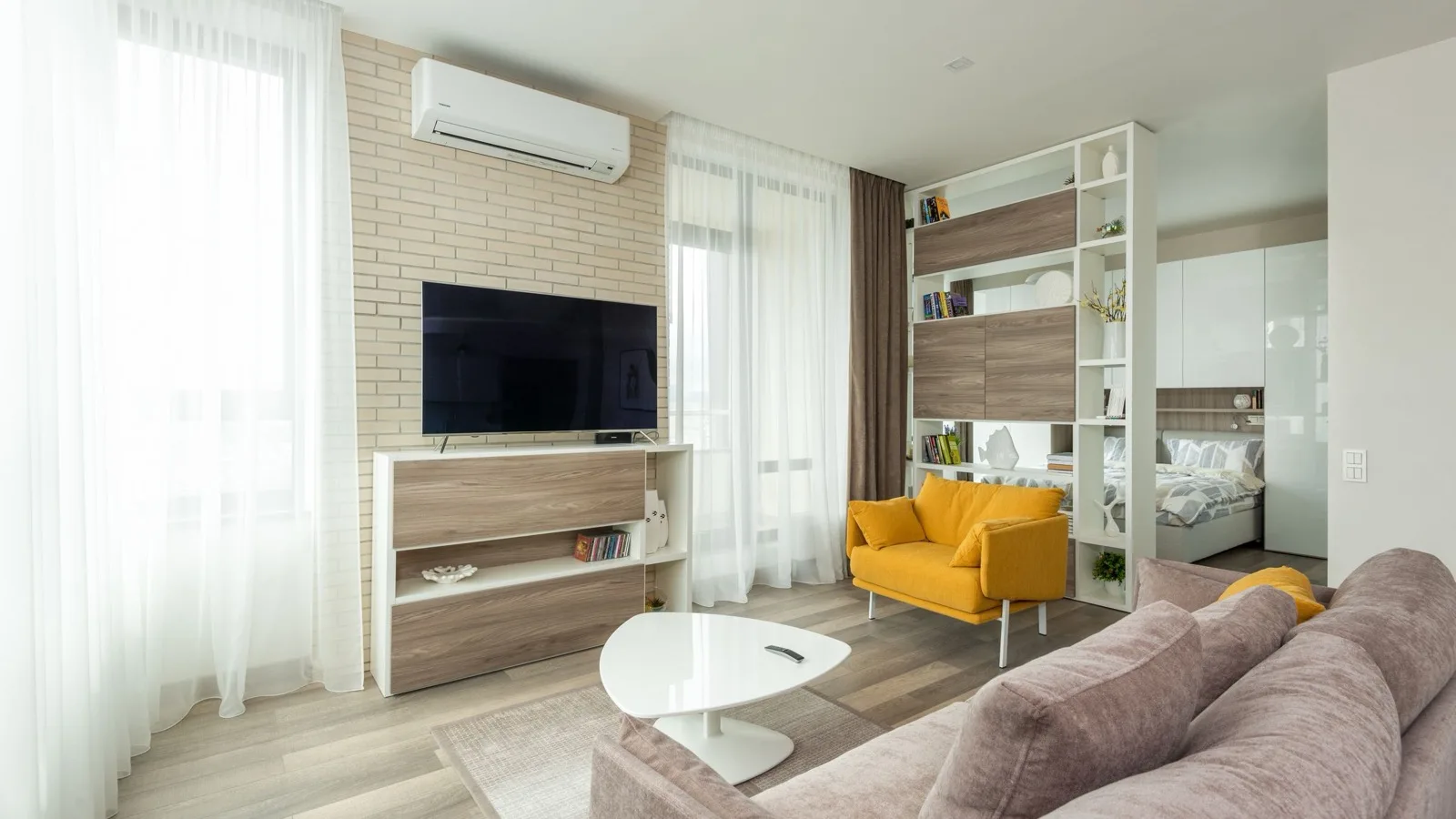
Shopping for the best DIY mini split for 500 sq ft can get confusing fast. You've got loads of brands to sort through, BTU options running from 6,000 all the way up to 12,000, and installation requirements that vary a lot from one system to the next. This guide is here to help you figure out how much capacity you need, which brands give you a real DIY experience, and why one option is the best pick for a 500 square foot space.
Quick Answer: Best DIY Mini Split for 500 Sq Ft
Zone Air is the best overall DIY mini split for a space that is around 500 sq ft. It has plug-in ease of use with the optional cord kit, and good heat pump performance at this size.
Here's what you might want to know up front:
- Standard HVAC sizing calls for about 20 to 25 BTU for each square foot. For 500 sq ft, that usually means you need a 12,000 BTU system. A 6,000 BTU system is not recommended for a 500 sq ft area under standard conditions, and a 9,000 BTU system is not recommended either.
- The top pick is Zone Air's 12,000 BTU 115V ductless mini split. It goes into a standard household outlet with an optional plug-in cord kit (it is hardwired by default) and comes with a precharged lineset that can be cut to a custom length, so no vacuuming, brazing or special tools are needed.
- While many people search for "6,000 BTU" or "9,000 BTU" for 500 sq ft, a properly sized 12,000 BTU unit handles real-world heat loads and keeps you comfortable all year round far more reliably. With a 12,000 BTU mini split, you get coverage for up to 550 sq ft.
- MRCOOL DIY is the main alternative for self-installers, and its 12,000 BTU DIY model runs on 115V too (the bigger sizes need 230V). Senville and Pioneer are strong budget options but generally need professional install and don't offer plug-in 115V or custom precharged linesets.
- Zone Air's USA-fabricated linesets come as a single run at the length you order. MRCOOL line sets come in fixed lengths, and going past those means adding an extension with a coupler kit. Efficient mini split systems can achieve SEER ratings above 20, and Zone Air hits 23 SEER2.
How Many BTUs for 500 Sq Ft?
Getting the BTU capacity right is the single most important decision. A unit that is too small runs all the time without ever reaching your set temperature, while an oversized one short-cycles, uses extra energy and has trouble with dry mode and humidity control.
- The basic rule is to use 20 to 25 BTU for each square foot. For 500 sq ft, that is about 10,000–12,500 BTU of cooling capacity.
- 6,000 BTU reality check: a 6,000 BTU unit usually covers 150 to 250 sq ft. These systems are not enough for typical 500 sq ft spaces. You might use one in a small home office or a well-shaded bedroom.
- 9,000 BTU sweet spot: a 9,000 BTU model is generally recommended for up to 400 to 500 sq ft in ideal conditions. Senville's 9,000 BTU systems are recommended for spaces up to 450 sq ft, and Pioneer's 9,000 BTU units are usually recommended for 250 to 350 sq ft. A 9,000 BTU system is generally too small for 500 sq ft unless conditions are optimal. It might work in mild climates with excellent insulation and little sunlight.
- 12,000 BTU - the right answer for most: a 12,000 BTU system is recommended for a typical 500 sq ft room or open zone. Most sizing charts put a 500 sq ft area at 9,000 BTU or more, but 12,000 BTU is the safer and more common pick.
- What pushes you higher: insulation, ceiling height and window exposure affect BTU requirements a lot. West-facing glass, ceilings over 8 ft, poor air sealing or high internal loads from appliances all push the number toward 12,000 BTU.
Quick BTU coverage guide:
| BTU Capacity | Recommended Coverage |
|---|---|
| 6,000 BTU | Up to ~250 sq ft |
| 9,000 BTU | ~350–450 sq ft |
| 12,000 BTU | ~500–550 sq ft |
| 18,000 BTU | ~700–850 sq ft |
| 24,000 BTU | Up to ~1,200 sq ft |
| 36,000 BTU | ~1,001–1,500 sq ft |
This is high-level guidance. If you have edge cases or extreme climates, a Manual J load calculation can be the ideal way to find the exact number.
Single-Zone or Multi-Zone for 500 Sq Ft
A single-zone system has one outdoor unit with one indoor air handler head. For a single open area of about 500 sq ft - a studio apartment, garage workshop or open-plan loft - this is almost always the right plan.
One outdoor unit connected to two or more indoor units is what a multi zone system has. A multi-zone system is better for closed-off rooms, such as a 900 sq ft two-bedroom layout where each room needs its own control. Brands like MRCOOL, Senville and Pioneer offer multi zone options, and Zone Air does too, but these projects need more planning and 230V equipment.
For a 500 sq ft space, keeping it single-zone means simpler installation, lower cost, better part-load efficiency and an easier DIY experience. With single-zone solutions designed for this size, Zone Air can give you complete comfort without complexity you don't need.
Zone Air: Best Overall DIY Mini Split for ~500 Sq Ft
For a 500 sq ft primary area, Zone Air is the top DIY choice. Of the four brands compared here, it is the only one that has 115V plug-in convenience and custom-length precharged linesets in one package.
- 115V plug-in power: Zone Air's 12,000 BTU system runs on a standard 110–120V / 15A circuit. An optional plug-in power cord kit lets many homeowners connect to a properly rated outlet, where local code allows it, instead of hiring an electrician to run a new 230V line - a cost and time savings that matters in any home.
- Custom precharged linesets: Zone Air offers USA-fabricated, factory-precharged linesets cut to the length the customer needs. Whether you need 16 ft, 25 ft or longer, each lineset comes as a single sealed run. That means no couplers in the middle of the run, where MRCOOL line sets come in fixed lengths and use a coupler kit to go longer.
- No refrigerant work: because every lineset arrives sealed and precharged from the factory, you eliminate the need for vacuum pumps, manifold gauges or refrigerant handling. This is advanced technology that makes the install really accessible.
- Efficient operation: ENERGY STAR mini splits use up to 60% less energy than standard electric resistance heating, and ductwork in unconditioned space can waste over 30% of energy. With its ductless design, Zone Air gets around both problems and gives you 23 SEER2 efficiency for lower operating cost.
- Additional details: the quiet indoor air handler has multiple fan speeds, sleep mode and works with Google Assistant and Amazon Alexa for smart control. The outdoor units are compact in size, and Zone Air backs everything with a 5-year parts and 7-year compressor warranty with DIY-friendly terms.
DIY vs Pro Install: What Makes a Mini Split Truly "DIY"?
Not every system labeled "DIY" actually lives up to the claim. Some still need a vacuum pump, flare tools, refrigerant gauges and a licensed electrician - which raises the question of what you're really saving.
A real DIY heat pump mini split should offer:
- Precharged linesets that eliminate vacuuming and refrigerant handling
- Clear step-by-step instructions with live support available
- Minimal special tools (basic drill, wrenches, level)
- No mandatory 230V electrical work
Zone Air checks every box. Its precharged custom-length linesets and optional 115V plug-in cord reduce or eliminate the need for HVAC-specific equipment or advanced electrical work. MRCOOL DIY systems use pre-charged Quick Connect lines and installation does not need HVAC tools for MRCOOL systems, but their lineset extension couplers add joints when you go past the fixed lengths. The 9K and 12K run on 115V and the bigger units need 230V. Those are hardwired, so you may want an electrician for the electrical connections.
Senville and Pioneer usually sell systems with flare connections that assume vacuum pumping and refrigerant line work, and Senville's warranty calls for a licensed HVAC professional for that part. They're affordable to buy, but total project cost goes up once you factor in professional labor.
Zone Air vs MRCOOL vs Senville vs Pioneer for 500 Sq Ft
Many shoppers will cross-compare these four brands when setting up a 500 sq ft space. Here's how they stack up in the details that actually matter for safety, performance and ease of install:
Zone Air has a 12,000 BTU 115V plug-in option with custom precharged lineset lengths fabricated in the USA. Single-run lines have no couplers in the middle. It's purpose-built for single-zone DIY setups and delivers 23 SEER2 with heating down to −13°F.
MRCOOL is the closest option for self-installers. MRCOOL's 12K is likely the most suitable for a 500 sq ft area if installation is DIY within their range. MRCOOL DIY systems can heat down to −13°F and use precharged quick-connect lines. However, extending those lines past the fixed lengths needs coupler kits that add extra joints. The 12K runs on 115V like Zone Air's, and at 23.5 SEER2 it is a little more efficient than Zone Air's 23.
Senville is a value-oriented brand offering 9,000 and 12,000 BTU ductless mini split systems. The AURA line reaches up to about 25 SEER2 and has a 10-year compressor warranty. But Senville is sold as pro-install equipment - you'll need a technician for evacuation and pressure testing to keep warranty coverage intact.
Pioneer is a budget-friendly, widely available brand with strong stock across retailers. Its 12K models hit around 20–25 SEER2 depending on the line, with a 5-year warranty if you register it (1 year if you don't). Like Senville, Pioneer is not really DIY plug-and-play in our view - plan on hiring a professional for the refrigerant and electrical work.
Zone Air is the only option among these that combines 115V plug-in convenience with custom precharged lineset fabrication. If you want to confirm a real DIY experience for a 500 sq ft space, it's the clear pick.
Key Features to Look For in a 6,000–12,000 BTU Ductless Mini Split
This is a shopping checklist you can use when you compare specs across brands and find the right fit for your space:
- Efficiency: you'll want to look for SEER2 ratings above 20. Higher efficiency means lower monthly cost. ENERGY STAR mini splits can use up to 60% less energy than standard electric resistance heating, so check for that certification.
- Electrical requirements: a 115V system like Zone Air's 12,000 BTU unit lets you skip panel upgrades. MRCOOL's 12K DIY is 115V too. Most 230V systems from MRCOOL, Senville and Pioneer need a new dedicated circuit and disconnect box.
- Lineset quality: precharged linesets are essential for true DIY. Custom-length, USA-fabricated linesets from Zone Air reduce unnecessary curves, coils and joints.
- Air handler specs: target quiet operation under 40 dB on low, multiple fan speeds and easy filter access. Every ductless mini split head includes a washable mesh filter built into the unit.
- Cold-climate heating: if you're in a colder region, you should verify low-ambient performance. Zone Air and MRCOOL systems can heat in temperatures as low as −13°F. Senville's AURA line pushes to −22°F.
- Warranty and support: compare compressor and parts coverage in years. Check whether technical support is DIY-friendly or geared strictly toward contractors. With homeowners in mind, Zone Air's warranty is designed for you.
How to Install a DIY Mini Split for 500 Sq Ft
This is a general overview - always follow the manufacturer's manual and local building codes.
- Planning: you'll want to choose an indoor air handler location that lets you get even airflow across the room. Don't point the head directly at seating or beds. Plan the shortest lineset run to the outdoor unit.
- Mounting: secure the indoor wall bracket level into studs or appropriate wall fasteners. Drill the combined lineset, condensate and power sleeve through the wall at a slight downward angle for drainage.
- Outdoor unit: place the condenser on a pad or wall bracket with enough clearance for airflow. Keep snow lines, landscaping and maintenance access in mind.
- Lineset connection: with Zone Air, lay out the precharged custom-length lineset, route it carefully, connect factory-flared fittings to indoor and outdoor units at the specified torque specs, and open service valves as directed.
- Electrical: with a Zone Air 115V plug-in system, you may be able to use an existing properly rated outlet. Systems from MRCOOL, Senville and Pioneer that run on 230V usually need an electrician, a new dedicated circuit and a disconnect.
- Startup: Zone Air's precharged design means no gauges or vacuum equipment. Perform leak checks on joints, open valves in sequence, power up and monitor the system as directed.
- Ongoing maintenance: clean filters monthly and inspect lineset insulation and condensate drainage each season to keep performance strong and maintain comfort in your 500 sq ft zone.
Are you ready to size your system and start your install? Check Zone Air's current product range, confirm your room dimensions and pick the lineset length that fits your run. For 500 sq ft, a complete DIY mini split setup is closer than you think.
Specifications, efficiency ratings and warranty terms above are manufacturer-published as of October 2026 and are subject to change; verify the current terms for the exact model before you buy. Your unit's installation manual and local code take precedence over this guide. MRCOOL, Senville and Pioneer are trademarks of their respective owners. DIY HVAC Tools is owned and operated by Zone Air and is not affiliated with or endorsed by MRCOOL, Senville or Pioneer.