115V DIY Mini Split
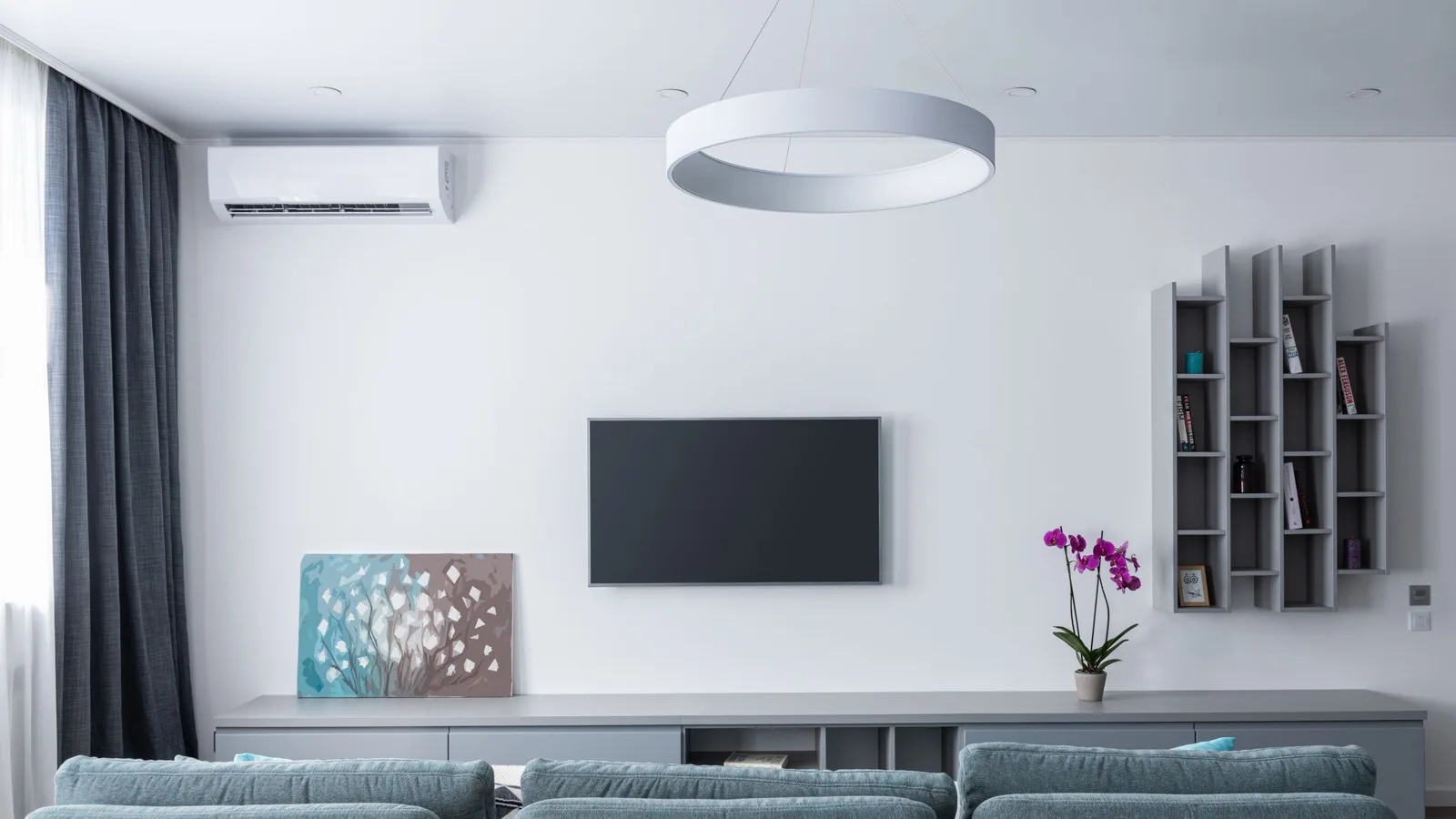
A 115v diy mini split from Zone Air comes in two sizes, 9,000 BTU and 12,000 BTU, and it runs on the standard household power you already have, and you can install it without having to call a licensed HVAC technician. This guide has the specs and installation for both units: what they need with power, what's in the box and how to figure out which one fits your space. If you're comparing brands instead, see our best 115V DIY mini split guide.
Why Zone Air's 115V DIY Mini Split Stands Out in 2026
Most homes in the U.S. already have 110-120V circuits on 15A breakers. With Zone Air's 9,000 BTU and 12,000 BTU ductless mini split systems running on a dedicated 15A circuit at that voltage, you get no 230V line, no panel upgrade and no 230V wiring project before you can start cooling or heating a room. For garages, extra rooms, apartments, home offices and older homes that lack ductwork, a 115V mini split system is one of the simplest paths to year-round climate control.
Both models have a 23 SEER2 efficiency rating. For context, window units and PTACs from even a few years ago usually rated between 10 and 16 SEER. A 23 SEER2 high efficiency heat pump can deliver the same BTU of cooling while drawing far less electricity, and because ductless systems blow conditioned air directly into the room, they can avoid the 20-30% duct losses that are typical of central forced-air systems.
These are true DIY heat pump units. Each box comes with a factory pre charged R 454B quick-connect line set. There is no vacuum pump, no manifold gauges and no refrigerant license required. Cold-climate heating is rated down to −13°F, and indoor sound levels drop to 30 dB in quiet mode. Two things set these units apart: they can plug into a dedicated 15A outlet with the optional cord kit where local code lets you, and Zone Air cuts the pre-charged line set to the length you need (more on both below).
Here's a quick summary you might want to check out for the two models:
- 9,000 BTU, 115V / 15A: 23 SEER2, covers up to about 450 sq ft, heating capacity of about 9,400 BTU/h, $1,899.99 with 16 ft line set
- 12,000 BTU, 115V / 15A: 23 SEER2, covers up to about 600 sq ft, heating capacity of about 12,400 BTU/h, $1,999.99 with 16 ft line set
What Is a 115V / 110V DIY Mini Split?
A mini split is a ductless HVAC system that pairs one outdoor condenser with one or more indoor air handlers. The outdoor unit and the indoor unit are connected by lines that carry refrigerant and by wires that carry control signals. Unlike central air, there's no ductwork. That can make mini splits a good fit when you want to heat and cool individual rooms with targeted comfort.
A 115V or 110V unit runs on a dedicated 15A residential circuit. That's the same kind of circuit that most homes already have plenty of. It's what makes these systems so attractive for DIY. Most 115V models, including Zone Air's 9K and 12K BTU units, are single zone system pairs. That means one outdoor unit is paired with one indoor head.
- Typical applications: A 9,000 BTU single zone system can handle rooms that are up to about 450 sq ft. A 12,000 BTU model covers spaces that are up to 600 sq ft, so think about bedrooms, home offices, a garage or bonus rooms.
- 115V vs. 230V: 230V outdoor units need double-pole breakers and wiring that is heavier. The 115V setup avoids that cost and that complexity, though it's generally limited to 9K–12K BTU capacities.
- Why homeowners choose 115V: Lower installation costs, simpler electrical work, fewer permit headaches and compatibility with existing circuits in most homes.
Zone Air 115V DIY Models: 9,000 vs 12,000 BTU
Choosing between 9K and 12K is about room size, the quality of your insulation, and how much sun heat you get. Both share the same voltage, the same need for a dedicated 15A circuit. The same wall mounted air handler form factor. The difference is capacity.
For bedrooms and offices with moderate heat gain, the 9,000 BTU 115V model is a good fit. Zone Air recommends it for rooms of about 250 to 450 sq ft. 9,000 BTU systems usually cover spaces of 350 to 400 square feet in warmer climates with average insulation.
With larger living rooms, studios and shops, the 12,000 BTU 115V model is what you'd want. Zone Air recommends it for about 350 to 600 sq ft, and 12,000 BTU is better for larger spaces with higher solar heat gain (south-facing windows, poor shade, etc.). 12,000 BTU systems usually cover spaces of 400 to 550 square feet depending on insulation and climate.
Key inline comparisons:
- With a single-zone wall-mounted indoor air handler and a compact outdoor condenser that are connected by the included communication cable, both units can work well for DIY installs.
- Both run on 110-120V / 15A, so you don't need to have a double-pole 230V breaker
- Pricing: $1,899.99 (9K) and $1,999.99 (12K), each with a standard pre charged 16 ft line set included
- If you need more coverage, Zone Air's 18K BTU unit covers up to 900 sq ft, but it needs a 230V / 30A double-pole circuit and has no 115V option
Systems should be sized based on actual heating and cooling loads. If you put a 12K unit in a 300 sq ft room, it can lead to short-cycling, poor dehumidification and a higher cost to operate. Zone Air's coverage area recommendations are a starting point based on average insulation. You might want to run the free mini split sizing calculator or a load calculation if your space is unusual.
True 115V, 15A DIY Operation Electrical Advantage
115V mini split systems operate on standard household voltage, the same voltage that powers a kitchen appliance or bedroom outlet. Each Zone Air 9K and 12K unit needs a dedicated 15A single-pole breaker and appropriate gauge wire run to the outdoor unit. An optional 3-prong plug-in cord kit simplifies the connection further: it plugs into a dedicated 15A GFCI outlet with a weatherproof cover where local code allows a plug-in install. Operating on standard 115V power reduces installation complexity for older homes that may not have a 230V sub-panel or spare slots for a double-pole breaker.
All installations must still comply with NEC and local codes. That means an outdoor disconnect where required, GFCI protection where applicable and proper grounding. If you are not comfortable with electrical work, hire a licensed electrician for the wiring portion only; the refrigerant side still needs no professional.
Traditional 230V mini splits typically require a double-pole breaker, heavier gauge wire and often a permit-driven electrician visit. The 115V design removes that layer of cost and delay. Power connects outdoors at the condenser, and the indoor air handler is powered from the outdoor unit through the communication cable, so the one electrical run goes from your breaker panel to the condenser.
Safety basics: shut off the breaker before any wiring, never oversize the breaker beyond 15A for these units, and never use an extension cord.
Pre-Charged Quick-Connect Line Set DIY Design
For homeowners who want heating and cooling performance like a professional install but don't want to pay a contractor for the labor, Zone Air's DIY design fixes a specific problem. The answer is a factory-sealed refrigerant circuit that needs no vacuum pump, no gauge set and no refrigerant license.
Zone Air units use eco-friendly R-454B refrigerant, which has lower global warming potential than the R-410A in older models. The outdoor condenser and line set arrive pre-charged. You route the insulated copper lines through a wall penetration, mate the quick-connect fittings, tighten them to spec and open the service valves. No brazing torch, no nitrogen flush, no manifold gauge set. The refrigerant stays sealed in the factory-charged line set and never opens to atmosphere, so there's no vacuum pump and no EPA 608 certification needed for a standard install.
R-454B is labeled A2L (slightly flammable). Follow Zone Air's installation manual for clearances, leak detection and avoiding open flames near the line set.
What's in the box: outdoor condenser, wall-mounted air handler, 16 ft pre-charged line set with quick-connect fittings, communication cable, condensate drain hose and tape, remote control, mounting bracket and hardware.
Cold-Climate Heat Pump and Hyper Heat Performance
A heat pump is a system that can run in reverse: it moves heat out of your room in summer (cooling) and pulls heat into your room from outdoor air in winter (heating). You can get year-round climate control with mini split heat pumps that are rated for low ambient temperatures.
Both Zone Air 115V models are rated for heating down to −13°F, and for cooling in outdoor temperatures up to 131°F (product specs). At 47°F outdoor, the 9K model gets a COP of about 3.81. At 5°F, it is still operating at COP ~2.1. Capacity does decline as outdoor temperature drops. This is true for every heat pump on the market.
Some hyper heat systems are rated to −22°F or lower. Zone Air balances cold-weather capability with 115V electrical convenience. For colder climates where temperatures stay below −13°F for extended periods, supplemental resistance heat (baseboard, electric furnace) fills the gap. Mini splits can reduce energy costs compared to electric resistance heating when used as heat pumps for the majority of winter hours.
At about 30 dB, Zone Air's quiet mode sits at about the volume of a whisper, which makes these practical for bedrooms and nurseries during all season comfort operation. The outdoor unit is measuring about 52 dB.
Energy Efficiency, SEER2 Ratings and Potential Savings
SEER2 (Seasonal Energy Efficiency Ratio 2) is the current DOE standard for rating cooling efficiency. In 2026, Zone Air's 23 SEER2 puts these units among the more efficient 115V DIY options you can get. Both models also carry an EER2 of 13.0 and an HSPF2 (Region IV) of 10.0, and both are AHRI Certified. Higher SEER2 ratings mean lower monthly utility bills for the same BTU output. If you do have a 230V circuit available, Zone Air's 230V 9K and 12K models rate 24 SEER2, one point higher than the two units covered here.
Inverter variable-speed technology saves energy by adjusting compressor speed to match the room's actual load. Instead of cycling on at full blast and off again, the compressor can modulate down to as low as 2,500 BTU/h, keeping a steady target temperature without the hot-cold swings you get from fixed-speed units. HVAC systems with inverter compressors can save energy and keep temperatures more stable through both heating and cooling seasons.
High-efficiency mini splits can save on energy costs compared to traditional systems. Going from a 13 SEER window unit or PTAC to a 23 SEER2 ductless mini split system cuts the electricity per BTU of cooling by about 40% on paper (more if you're coming from a 10 SEER unit), though real savings depend on climate and how you use it.
What affects real-world efficiency: insulation quality, local climate extremes, thermostat setpoints and maintenance (clean the reusable filters, keep the outdoor coil clear, check the condensate drain). The 9K, 12K and even larger 18,000 BTU systems are sharing similar inverter technology, but this article focuses on the 115V 9K and 12K sizes.
Lineset, Line Set Length Options & Installation Flexibility
The refrigerant line set is a pair of insulated copper tubes that carry R-454B refrigerant between the outdoor condenser and the indoor air handler. Zone Air's 115V DIY systems include a standard 16 ft pre-charged line set, which is long enough for most installations where the outdoor unit sits directly below or next to the indoor head.
For trickier layouts (detached garages, rooms on the far side of a house, or second-floor installations with ground-level condensers), Zone Air sells longer pre-charged sets in 25, 33, 50 and 75 ft and it will cut the pre-charged line set to the exact length you measure, any whole foot from 5 to 75 ft. Each one is a single continuous factory-sealed run with no field joint. That means there is no coil of extra line set behind the condenser and no coupler joining two sets. Maximum and minimum lengths, plus allowable elevation differences, are published in the Zone Air specification sheets. Longer runs can reduce capacity and efficiency slightly from pressure drop and heat loss, so check with Zone Air support if you're not sure which length to order.
A 16 ft lineset cover kit (sold separately) protects the exposed lines on the exterior wall and gives you a clean, paintable channel for better curb appeal.
Planning Your 115V DIY Mini Split Project
Before you change anything in your home or start ordering, careful planning of room size, electrical capacity and where the line set will run will make or break your project.
- Sizing: Match BTU capacity to your room. A 9,000 BTU unit covers up to roughly 450 sq ft. A 12,000 BTU system covers spaces up to 600 sq ft. Factor in insulation quality, ceiling height and window exposure.
- Power: Mini split systems need to have a dedicated 110V or 115V circuit. You'll want to confirm that your chosen Zone Air model draws 15A or less. You'll want to check that you have a free breaker slot in your panel. No extension cords - ever.
- Clearance: Indoor air handlers need to have about 6 to 8 inches of clearance from the ceiling for the best airflow. Outdoor condensers need a minimum of 12 inches of clearance around them for airflow. They need to be on a level pad or bracket.
- Line set path: You need to measure the path between the indoor and outdoor units, then pick the right length from what Zone Air offers. You can't cut pre charged line sets on the site, so it pays to measure twice.
- Codes and permits: Check local building codes before beginning installation to ensure compliance with regulations. Mini split installations must comply with national electrical codes and local regulations. Local municipalities may require a mechanical or electrical permit for DIY HVAC installations. Electrical work should be performed by a qualified electrician if the installer is not trained.
Step-By-Step DIY Installation Without HVAC License
These systems are built for you to install yourself if you're a competent homeowner. Both the 9,000 BTU and 12,000 BTU models are using similar installation methods, and Zone Air estimates about 4 to 6 hours for two people on a first-time install (around 3 hours with experience). You'll need a cordless drill, a 3-inch hole saw, a level, screwdrivers, two adjustable wrenches for the quick-connect fittings (an HVAC torque wrench is preferred but not needed), a tape measure and a stud finder. DIY pre-charged mini split systems don't need EPA certification for installation because the refrigerant circuit stays sealed the whole time.
High-level steps:
- Pick the location. Pick the indoor wall (load-bearing stud, above furniture line) and the outdoor pad or bracket location. Make sure the condensate drain slopes away from the wall.
- Mount the indoor air handler. Use the included pattern to mark holes, secure the mounting bracket to studs, and level it.
- Drill the wall penetration. A 3-inch hole angled slightly downward toward the outside lets the line set, communication cable and drain hose pass through.
- Place the outdoor unit. Set the outdoor condenser on a level pad or stand, keeping the airflow clearances from the install manual. Put it where snow, ice and debris won't block the condenser coil.
- Route the line set and cable. Connect the pre-charged quick-connect fittings at both indoor and outdoor ends. Bundle the communication cable and drain line neatly.
- Connect power. Wire the dedicated 15A circuit to the outdoor unit disconnect (or plug the optional cord kit into its dedicated GFCI outlet). Check connections before you turn it on.
- Commission it. Power on, run auto cool mode and confirm airflow, temperature drop and condensate drainage.
You can install ductless systems in various settings like garages or offices. For full details, follow the official Zone Air install manual and the mini split installation guides.
Testing Your New 115V Mini Split
Once everything is connected and sealed, power up the system. A Zone Air unit that has been installed correctly should respond within a few minutes. You can install a DIY mini split system without specialized HVAC training when you follow the manual.
- Initial test: The unit can be set to cooling. The indoor head should blow cold air, and both the outdoor fan and the compressor should engage. After a few minutes have gone by, the suction line (that's the larger tube) should feel cool. Switch it to heat mode so you can confirm it heats too.
- Noise and drainage: The indoor sound should be about 30 dB in quiet mode. If you hear vibration, check that both units are mounted securely. Also confirm the condensate drains to the outside properly.
- Smart controls: You can pair your Zone Air unit with the app during setup. You can use ECO mode, sleep mode and timer features to manage energy use throughout the day.
- Ongoing maintenance: Clean or replace the filters every 30–60 days. Gently clean the indoor coil and the outdoor condenser fins one time each year. Check the insulation on the line set and the connections for wear or leaks each season.
- Long-term value: A Zone Air 115V DIY mini split that is installed the right way gives you efficient, quiet heating and cooling for many years. At 23 SEER2 it's inexpensive to run. You can visit zone-air.com for model-specific manuals, live technical support, and replacement line sets to keep your system running at its best.
Smart Controls, Comfort Features and Daily Use
Both 9K and 12K models include built-in Wi-Fi for smartphone app control, plus voice commands through Amazon Alexa and Google Home. The IR remote has its own 7-day schedule and works without Wi-Fi.
Mini split systems can provide cooling, heating, dehumidification and fan-only modes. Auto mode can switch between heating and cooling based on the room's temperature relative to your setpoint. Dual-axis louvers let you adjust airflow direction horizontally and vertically from the remote or the app.
The Follow-Me function uses the sensor in the remote for precise temperature readings near where you are in the room, rather than relying only on the sensor built into the air handler. This helps in large or oddly shaped spaces where temperature varies across the room. Scheduling and away modes save energy. You can set the system to adjust the temperature back when nobody's there.
Sleep mode drops fan speed and sound to about 30 dB, which works well for bedrooms and nurseries. For maintenance, clean the reusable filters monthly, keep leaves and debris off the outdoor coil, and check the condensate drain at least once per season to avoid water damage.
Warranty, Support and Long-Term Value
Zone Air's standard warranty covers 7 years on the compressor and 5 years on parts for the 115V DIY mini splits when you install them according to instructions and applicable codes. There's no registration deadline. Registering just keeps your proof of purchase on file. Confirm current terms when you buy. You can return uninstalled units within 30 days of delivery, and shipping is free to the lower 48 states.
DIY installation does not void the warranty. This is setting Zone Air apart from many conventional brands that need professional installation by a licensed HVAC technician to keep warranty coverage.
The pre-charged DIY design takes contractor labor out of the bill. Zone Air's approach eliminates vacuum pumping, refrigerant charging and brazing from the job, cutting it down to a few hours of your own labor. Live technical support runs 8 AM to 6 PM Mountain Time if you get stuck.
Long-term value adds up: higher efficiency means lower utility bills each month, inverter mini splits like these are designed to last 15-20 years with proper maintenance, and the warranty backs you up if components fail early.
What Else Sets Zone Air Apart
- Custom-cut pre-charged line sets from 5 to 75 ft, each one is a single continuous run, as covered above.
- If you later want more than one room on one condenser, Zone Air's multi-zone systems are the only DIY mini split that lets you mix wall-mount, ceiling cassette and concealed ducted units on one outdoor unit (as of October 2026).
- On 230V, the 9K and 12K models have a rating of 24 SEER2.
- These units are rated to cool in outdoor temperatures up to 131°F.
- Against MRCOOL: its 115V DIY 9K and 12K are hardwired and rate slightly higher at 23.6 and 23.5 SEER2, but they come in fixed line set lengths, while Zone Air's can plug in with the optional cord kit where code lets you and can be ordered with a custom-cut set.
- Final assembly, testing, and inspection in the USA, from globally-sourced components.
With 23 SEER2 cooling efficiency, −13°F heating, and DIY installation on a standard household circuit, Zone Air's 9K and 12K 115V models are worth a look. Whether you need something for a single bedroom or a 600 sq ft living space, these units cover the most common residential scenarios. Check the official spec sheets and consult Zone Air support to confirm the right BTU capacity for your space before you order.
Specs and warranty terms are manufacturer-published as of October 2026, subject to change. Verify before purchase. MRCOOL® is a trademark of its owner. Zone Air and DIY HVAC Tools are not affiliated with or endorsed by MRCOOL.