Best DIY Multi Zone Concealed Ducted Mini Split: Why MRCOOL Doesn't Offer One (and Who Actually Does)
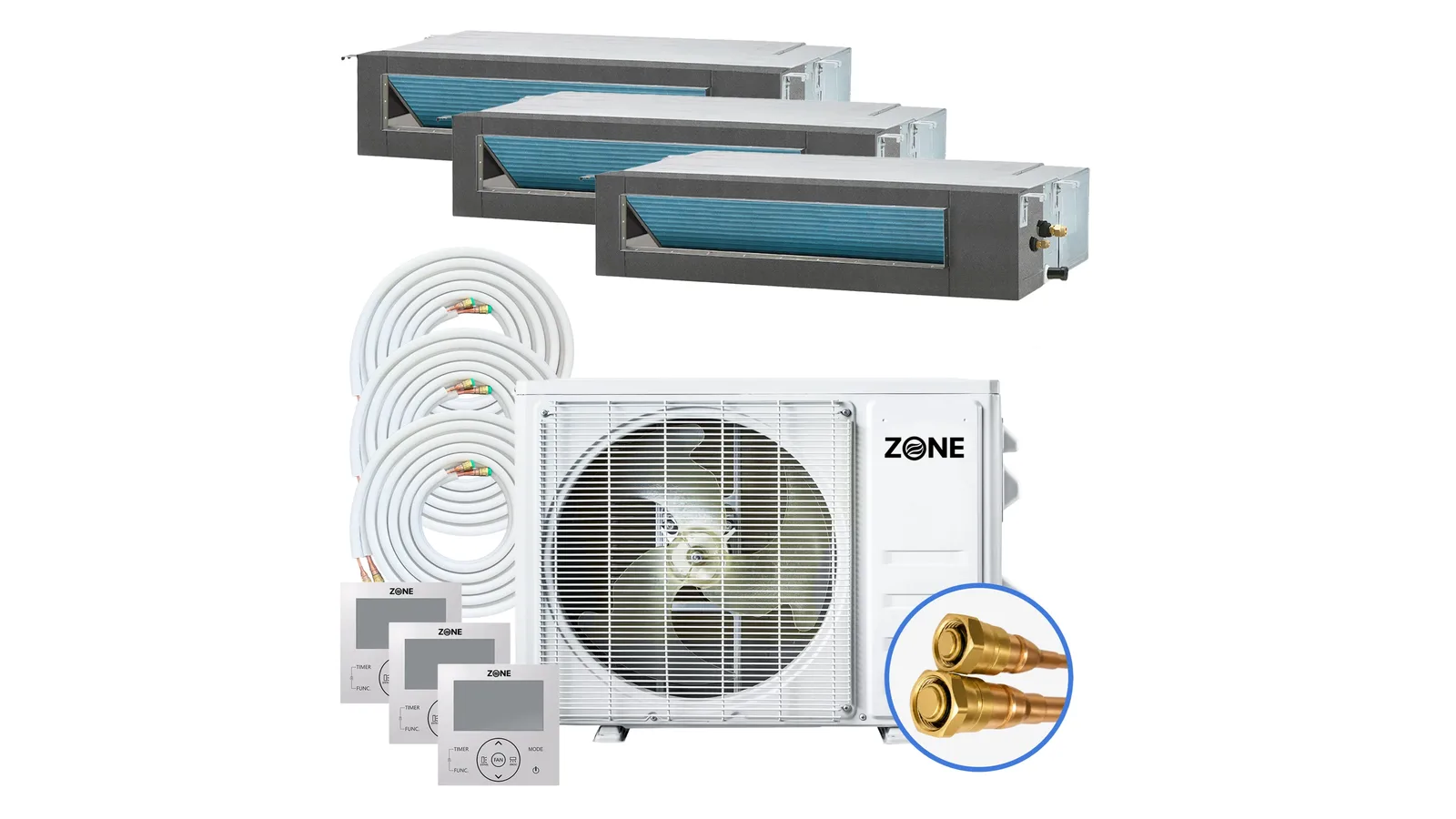
If you have been searching for the best DIY multi zone concealed ducted mini split system from MRCOOL, you are not alone, but the answer might surprise you. Here's what you might want to know about who actually makes one and how you can plan your multi zone project.
Does MRCOOL make DIY concealed duct multi zone?
As of 2026, MRCOOL does not have a DIY-rated concealed ducted multi zone mini split system that you can buy. Their mini splits are excellent ductless heating and cooling products, but their DIY multi zone range focuses on wall-mount and ceiling cassette indoor units, not concealed ducted heads that are hidden above ceilings.
Zone Air is the only DIY concealed ducted mini split system on the market. That means if you want a concealed ducted unit for individual rooms, it's your only DIY option. It comes with pre charged line sets and quick connect fittings, so you can install the indoor and outdoor equipment without a vacuum pump, refrigerant gauges or conventional refrigerant service equipment.
To clarify the words: a diy mini split refers to a heat pump system that has factory-sealed, pre-charged refrigerant lines so you don't have to do conventional HVAC evacuation. Multi zone means one outdoor condenser sends refrigerant to multiple indoor units, and each one is independently controlled. A concealed ducted head is an air handler that is hidden in a ceiling cavity, attic or closet and delivers conditioned air through short ducts to registers, unlike a visible ductless mini split wall mount that hangs on your living room wall.
This guide is for homeowners who are seeking independent heating and cooling solutions across 2–3 zones, especially 3 zone concealed duct installs for whole-floor comfort.
What is a concealed ducted DIY mini split?
With a concealed ducted mini split system, the indoor unit is hidden above a ceiling, inside a soffit or in a closet. Short duct runs carry conditioned air to supply registers in one or more rooms, while a return grille sends air back to the handler. The result is that it looks and feels like central air, but without the massive ductwork.
These differ from standard ductless mini split wall units, which are visible on walls, and from full central HVAC systems that have large air handlers and extensive plenum networks. Concealed ducted heads sit in a middle ground: the delivery is hidden and the ducts are lightweight and short.
Consider a 3 zone setup. One concealed ducted unit in the hallway ceiling conditions the master suite and guest bedroom through two supply registers, while separate zones handle the living area and home office. Each zone is independently controlled. These are still inverter heat pumps that are capable of reliable heating and cooling, and newer models run on R 454B refrigerant rather than older R-410A.
Why would you want this? You can get cleaner looks, fewer visible indoor heads and a room layout that doesn't have to work around wall-mounted equipment. It's the central air feel without central air complexity.
DIY vs pro-install: what makes a mini split "true DIY"?
Not every mini split that is labeled "easy install" counts as a true diy system. Many brands ship bare copper refrigerant lines that need flaring, brazing and vacuuming with specialized equipment that only licensed technicians usually own.
A true DIY mini split system meets these criteria:
- Pre charged line sets that have quick connect fittings
- No refrigerant handling or EPA Section 608 certification needed
- No vacuum pump or manifold gauges are required
- The manufacturer clearly permits homeowner installation without voiding the warranty
Both Zone Air and MRCOOL DIY wall-mount systems meet these criteria for their own product types. However, concealed ducted units from other brands like Mitsubishi or Fujitsu are almost always the preferred professionally installed option, and they need conventional installation procedures and professional HVAC labor. By engineering concealed ducted heads specifically for the DIY install process, Zone Air broke that pattern.
Zone Air, the only DIY concealed ducted multi zone in 2026
Zone Air offers what no other brand does in 2026: a concealed ducted mini split that is designed from the ground up for homeowner installation. Its Thin-Air Concealed Series includes dual-zone and 3-zone packages that pair a multi zone outdoor condenser with slim concealed ducted indoor heads that are about 8 inches tall.
A typical Zone Air system includes:
- One outdoor unit (27,000 BTU cooling / 28,000 BTU heating) that has an inverter compressor
- Two or three concealed ducted indoor heads that have built-in condensate pumps
- Pre charged line sets with R 454B (sold by length, 5–75 ft per zone)
- Efficiency of 19 SEER2 on dual-zone packages and 22 SEER2 on 3-zone packages
- Cold weather performance down to −13°F outdoor temperatures
The concealed ducted indoor unit goes above the ceiling, and each head can feed multiple supply registers across a bedroom wing, bonus room or hallway. Based in Salt Lake City, UT, Zone Air offers a cooling solution and heating system in one package. The brand designs these systems for whole-floor updates, finished basements and attic conversions where visible wall heads are not wanted. Because its multi zone packages allow mixing concealed ducted heads with wall-mount or cassette units on the same outdoor condenser, you get layout flexibility that no other DIY-oriented equipment provides.
What makes Zone Air different
Being the only DIY concealed ducted option is the big one, but it isn't the only thing that sets these systems apart:
- One unit, two or three rooms. Each concealed unit can feed 2–3 rooms through short duct branches. Keep in mind that rooms sharing one unit also share one temperature setting, so put rooms together that like the same temperature.
- Fresh air or existing ducts. The concealed units can hook up to ductwork that's already in the house, or take a fresh-air intake. A wall-mount head can't do either.
- Mixed head types on one condenser. The 27K outdoor unit runs concealed, wall and cassette units together. MRCOOL's DIY multi zone condensers don't have a slim-duct unit to pair with at all.
- Line sets cut to length. Zone Air stocks 16, 25, 33, 50 and 75 ft line sets, or will cut any length from 5 to 75 ft. MRCOOL's DIY line sets come in 11.5, 16, 25, 35 and 50 ft, and longer runs get joined with a coupler (MRCOOL catalog).
- Fits tight ceiling bays. The units are 7⅞ inches tall, take return air from the rear or the bottom, and have adjustable static pressure (0.1–0.4 in. W.C.) so you can match them to your duct runs.
- Final assembly in the USA. Zone Air systems go through final assembly, testing and inspection in the USA, from globally sourced components.
Where MRCOOL fits with DIY ductless multi zone but no concealed duct
MRCOOL is a leading DIY mini split brand, and for good reason. Their DIY 5th Gen and Easy Pro lines use pre charged quick connect line sets and R 454B refrigerant. Easy Pro is a single zone wall-mount line, while the DIY 5th Gen multi zone range lets you mix wall units and OuttaSight ceiling cassettes on one condenser. For homeowners who are comfortable with multiple indoor heads visible on walls or ceilings, MRCOOL delivers strong cooling performance and maximum efficiency in ductless configurations.
MRCOOL does sell a ducted DIY option, the DIY Hybrid Air Handler, but it's a different kind of product. It's a larger cabinet-style air handler that is built to connect to a traditional duct network, and MRCOOL matches it with its 24K and 36K single zone DIY condensers rather than offering it as a head on the multi zone condensers. It is not a slim concealed ducted head in the Zone Air sense. So yes, there are other DIY ducted systems, but they're whole-house air handlers. If you want a concealed ducted mini split for individual rooms, Zone Air is the only DIY option.
A MRCOOL 3 zone setup gives you three visible heads, wall units or ceiling cassettes. A Zone Air system lets you hide one or more zones behind ceiling registers using concealed ducted mini splits. If you specifically want DIY concealed duct on a multi zone condenser, MRCOOL is not the solution. Cooper and Hunter equipment discussed online, including Hunter hyper heat models, similarly stays a preferred professionally installed option rather than true DIY concealed duct.
Multi zone design basics with 2–3 zones and the 3 zone sweet spot
Most concealed ducted DIY projects target 2–3 zones, with 3 zone configurations hitting the sweet spot for whole-floor comfort. Each zone is independently controlled from a single outdoor unit.
Common zone plans include:
| Zone | Location | Suggested Head Type |
|---|---|---|
| A | Bedroom wing / hallway | Concealed ducted |
| B | Living room / kitchen | Wall mount or cassette |
| C | Home office / bonus room | Concealed ducted or wall mount |
A concealed ducted head can serve multiple small rooms as a single zone through short duct runs, while a ductless wall mount usually covers one room per indoor head. For sizing, a 3 zone system usually needs a 24,000–36,000 BTU outdoor unit. To ensure balanced performance, the outdoor condenser's listed capacity should match or slightly exceed the combined multiple indoor unit capacities. Ceiling height and insulation quality directly affect BTU requirements.
Efficiency, refrigerants and future-proofing (SEER2, HSPF2, R-454B)
Efficiency ratings are what determine your long-term operating costs. SEER2 measures cooling efficiency and HSPF2 measures heating efficiency. Zone Air's concealed ducted systems deliver 19–22 SEER2, while their wall-mount heads reach 23–24 SEER2. The difference comes from duct pressure drop and external static pressure demands that are built into concealed ducted designs.
On refrigerants, the industry is shifting from R-410A to R 454B, which carries a lower global warming potential and matches EPA AIM Act requirements. Both Zone Air and MRCOOL's newest DIY systems use R 454B in their pre charged line sets. Choosing a mini split system that is already on R 454B improves long-term service and the chance of getting utility rebates. Zone Air's concealed ducted systems were designed with this refrigerant phase-down in mind.
Cost and planning for DIY concealed duct multi zone
Installing multi zone systems yourself delivers significant savings. Equipment costs for a Zone Air dual-zone concealed ducted system run about $4,000 for the outdoor and indoor equipment, and about $4,800 for a 3-zone package, not including basic installation materials like flex duct, registers and hangers. Line sets are sold separately by length.
The cost difference matters because installation varies considerably depending on whether you DIY or hire a contractor. Professional HVAC labor on a 3 zone concealed ducted project can add 50–100% above listed equipment prices, making actual project costs double the hardware alone. Qualifying DIY installations eliminate HVAC installation labor completely, though you may still need a licensed electrician for the 240V dedicated circuit. Follow local electrical codes and review professional installation requirements for electrical requirements before starting.
Ideal DIY skill level: comfortable with framing, ceiling work, basic condensate plumbing and coordinating an electrician. Timeline for a 3 zone project is about 3–5 days: planning, rough-in ducts and mounting, outdoor components and wiring, then final connection and startup.
Choosing ductless, concealed ducted or mixed multi zone layouts
Often the best diy mini split solution is a hybrid. Use concealed ducted indoor units where appearance matters, like bedroom groups, hallways and small offices, and ductless wall or cassette units in spaces like garages, shops or open living areas.
Only Zone Air currently lets homeowners build mixed multi zone setups combining concealed ducted heads with wall units on the same outdoor unit, all within a DIY framework. Before choosing unit types, map each room's priorities: noise sensitivity, ceiling height, sun exposure and aesthetic needs. An expensive DIY oriented system isn't automatically the best. Correct zoning and indoor-unit choice usually matter more for comfort than simply choosing the highest BTU single zone option or cheapest ductless mini split available from any online HVAC seller.
FAQ about DIY concealed ducted multi zone mini splits in 2026
Can you legally install DIY concealed ducted mini splits?
Yes. With a Zone Air system, qualifying homeowner installations completed without refrigerant handling are fully supported by warranty. Pre charged line sets eliminate conventional vacuum pump use and refrigerant charging. However, local electrical codes may require a licensed electrician for the dedicated circuit. Always check local building permits before starting. Traditional mini split installations from other brands with concealed duct heads legally and practically require a licensed HVAC technician.
Does MRCOOL offer DIY concealed ducted multi zone?
No. MRCOOL does not have a DIY concealed ducted indoor unit in its DIY 5th Gen multi zone range. It focuses on ductless wall units and cassettes for your multi zone installation. Zone Air is the only DIY concealed ducted mini split system on the market, so if you want hidden ducted units for individual rooms it's your only DIY choice. If you want to connect multiple indoor units with concealed ducted delivery and permit homeowner installation, you should look beyond MRCOOL and look at the Zone Air system range.
How do concealed ducted DIY systems do in cold weather?
Modern inverter heat pumps in these DIY systems provide reliable heating down to about −13°F, which covers most northern U.S. climates. Some heat pumps are rated lower, to −22°F, including MRCOOL's single zone DIY Hyper Heat wall units, but those are wall units, not concealed ducted heads. Proper sizing, insulation and manufacturer minimum-temperature specs matter when you are relying on a concealed ducted system as a primary heating source. Always review HSPF2 ratings when comparing cold weather performance.
Are concealed ducted mini splits noisier than ductless wall heads?
Generally no. Because the concealed ducted unit is hidden, room noise is often lower than a wall-mount head. Zone Air specs show indoor sound levels around 26–40 dB. Short duct runs (under 15 feet per supply) and proper duct sizing keep register noise low. Outdoor unit noise is similar between concealed ducted and ductless systems.
What should you do first for a DIY concealed ducted multi zone system?
Start by drawing your floor plan and finding 2–3 sensible zones. Estimate BTU needs using an online calculator that accounts for square footage, insulation, ceiling height and climate zone. Then compare Zone Air's concealed ducted packages against popular ductless-only diy systems to match your room layout and aesthetic goals. Contact technical support before you buy to confirm line set lengths, indoor head combinations and electrical requirements for your chosen zone mini split configuration. Homeowners seeking independent heating and cooling across multiple rooms will find that planning zones carefully delivers better results than going after the highest-BTU outdoor equipment alone.
Planning hidden ducted heads on more than one room? Follow the multi zone concealed mini split DIY installation guide for the full multi-zone sequence.
Specifications, prices and warranty terms above are manufacturer-published as of October 2026 and are subject to change; verify the current terms for the exact model before you buy. MRCOOL, OuttaSight, Cooper & Hunter, Mitsubishi and Fujitsu are trademarks of their respective owners. DIY HVAC Tools is owned and operated by Zone Air and is not affiliated with or endorsed by those brands.