Best DIY Mini Split Heat Pump for a Basement in 2026
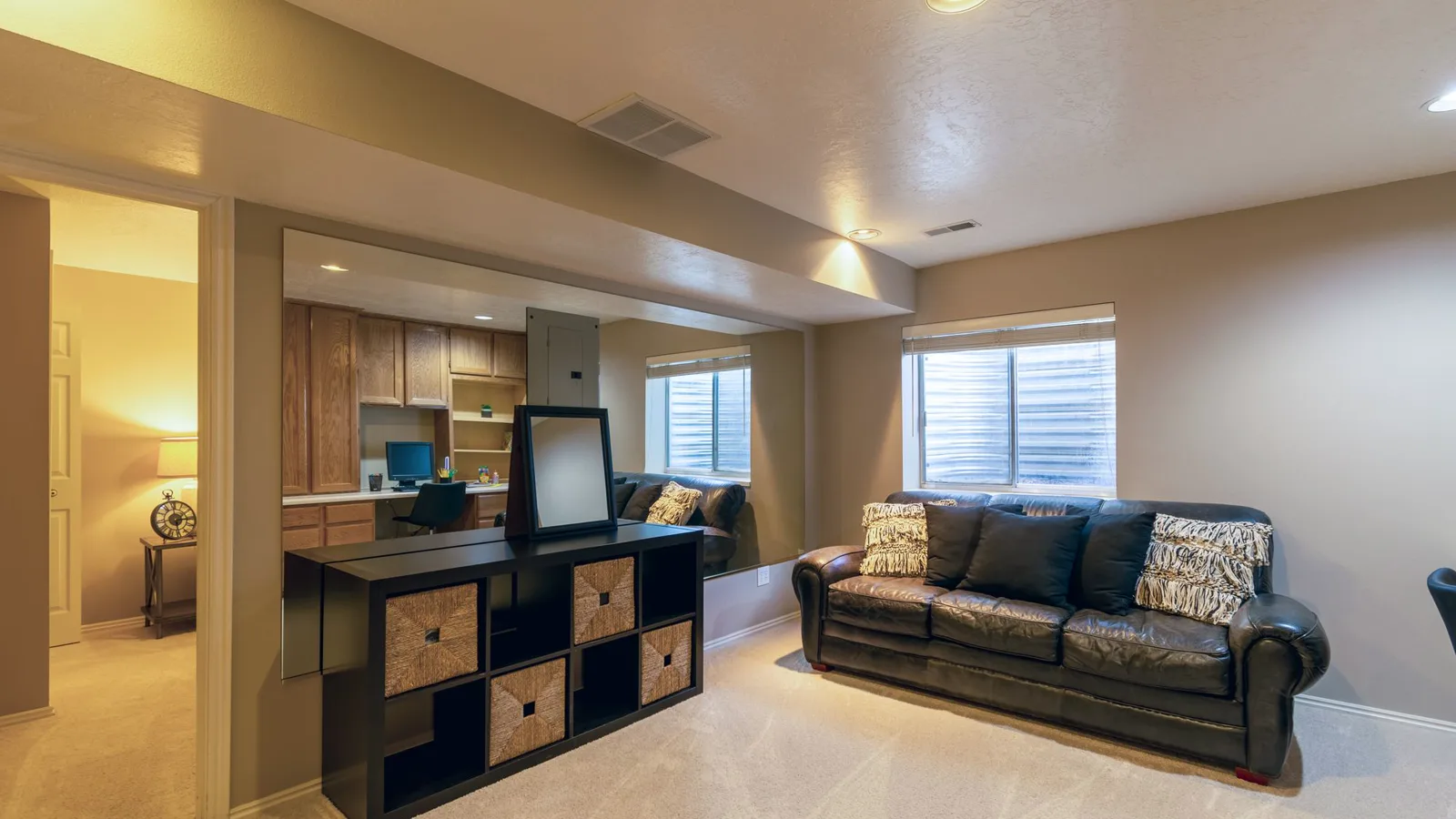
Basements lose heat faster, trap moisture, and sit below grade where ductwork rarely reaches, so the best DIY mini split heat pump for basement use has to solve all three problems. A pre-charged DIY mini split system does that without tearing open walls. This post covers sizing, installation planning, and specific product picks for basement use in 2026.
Quick Answer: The Best DIY Mini Split Heat Pump for Most Basements
For a typical finished basement between 500 and 900 square feet, Zone Air's cold-climate DIY single-zone system in the 12,000 to 18,000 BTU range is the best overall selection. It heats down to −13°F, it doesn't need ductwork (which is good for older homes), and it installs with pre-charged lines so you don't need refrigerant tools.
Here's why Zone Air stands out for basements:
- It's a true DIY install with pre-charged quick-connect lines. You don't need a vacuum pump, you don't need manifold gauges, and you don't need an EPA Section 608 license. The refrigerant circuit is factory-sealed, so evacuation and refrigerant charging aren't part of the job. With the install guides, you can see what you'll need: a drill, a 3 in hole saw, a level, wrenches and a torque wrench.
- Cold-climate heating to −13°F. Because this unit can handle low ambient temperatures, it keeps running when winter design temps drop well below freezing.
- Up to 24 SEER2 efficiency. The 9K and 12K 230V models hit 24 SEER2. When it comes to the 18K and the 115V models, those are 23 SEER2. At 24 SEER2 on 230V, Zone Air is the highest-efficiency pre-charged quick-connect DIY system of the brands we compared here.
- Custom-cut pre-charged line sets. Of the brands we compared here, Zone Air is the only one (as of October 2026) that cuts the pre-charged line set to the exact length you measure, any whole foot from 5 to 75. In a basement, the distance from the indoor wall to the condenser pad is rarely a round number, so having a line set cut to the exact length saves you from having a coil of copper sitting on the ground.
Other brands worth considering: Pioneer has a 12,000 BTU system and you can buy it for under $900. The Senville LETO 12K is priced at around $800. Both use flare-based connections and they do best in gentler climates.
For the ideal use case, picture a basement that is 500 to 800 sq ft and insulated, where you are comfortable mounting units and drilling holes but you don't want to handle refrigerant work.
Why Basements Are Different for a DIY Mini Split System
Basements stay cooler than the rest of the house, so what kind of heating do they need? They need heating that's built for the job. Concrete walls, earth contact and limited airflow create problems that rooms above ground just don't have.
- Moisture. Earth-contact walls stay cool, so warm air forms drops on the surfaces. Without active dehumidification, relative humidity can sit between 60% and 80%. Modern mini splits can help with basement humidity when the unit is in cooling mode, but during swing seasons when the unit doesn't run much, you may need supplemental dehumidification.
- Higher heating loads. Concrete holds cold. Heat gets out through foundation walls faster than through insulated wood-frame walls, so the room's square footage alone will lowball what you need in BTUs.
- Ceiling and layout limits. Lower ceilings, exposed joists, beams and existing ductwork limit where you can mount an indoor unit. Wall-mount heads need clearance above and below for proper airflow. Where there is no good wall, a concealed ducted unit can go in a soffit or above a drop ceiling. Zone Air's Thin-Air concealed ducted unit is 7⅞ in tall, serves two or three rooms from one unit, has a built-in condensate pump, and is the only DIY concealed ducted mini split system on the market as of October 2026.
- Electrical limits. Many basements have subpanels that don't have a lot of spare circuit capacity. With a 115V option, you get to skip the cost of running a new 230V dedicated circuit and the cost of thicker gauge wire. Zone Air's 9K and 12K 115V models run on a dedicated 15A circuit, and an optional 3-prong cord kit lets you plug it into a dedicated GFCI outlet where local code lets you do that (never use an extension cord).
- Condensate drainage. When you're below grade, there isn't much slope for water to drain down with gravity. Condensate drainage in basements often needs a condensate pump to lift the water up to a floor drain or a utility sink.
How to Size a DIY Mini Split for Your Basement
Heating systems should be sized right because if you get one that's too big, it causes short cycling, poor humidity removal and wasted money. Basement heating depends on insulation quality and local winter temperatures, so you really should do a quick calculation before you purchase.
Rules of thumb for basements:
- A well-insulated, finished basement: you need about 20 to 25 BTUs for each square foot.
- A poorly insulated or walk-out basement in a cold climate: 22 to 28 BTU for each sq ft.
- A small bedroom may need a system that has 9,000 BTU. A large living area could need 24,000 BTUs or more.
Concrete examples:
| Basement Size | Insulation | Climate | Recommended BTU |
|---|---|---|---|
| 500 sq ft | Finished, insulated | Cold (design temp −5°F to −15°F) | 9,000–12,000 |
| 700–900 sq ft | Finished, open-plan | Cold | 12,000–18,000 |
| 500 sq ft | Uninsulated block walls | Very cold | 12,000–15,000 |
Basements generally need systems with 9,000 to 12,000 BTU for heating a single finished zone. If you have a larger area or you are in a colder climate, step up to 18,000 BTU.
Factors that can push you to get a larger unit:
- Uninsulated foundation walls or exposed block
- Walk-out doors or large glass areas
- Ceilings above 8 ft
- Frequent door-opening to outdoors
When the basement goes over 1,000 sq ft or splits into separate rooms, run an online load calculator (Zone Air has a free mini split sizing calculator) or talk to a local HVAC contractor. A sizing consultation takes about 30 minutes. It costs far less than dealing with a year of comfort problems from a unit that is the wrong size.
True DIY vs. Traditional Flare-Based Mini Split Systems
True DIY mini splits ship with pre-charged line sets and quick-connect fittings. The homeowner never opens the refrigerant circuit. Pre-charged systems avoid conventional evacuation and refrigerant work, so no specialized tools or certifications are required.
Traditional flare-based DIY systems require cutting copper tubing, flaring connections, pulling a vacuum and pressure testing. A vacuum pump for DIY installation costs $120 to $250, and the complete tool kit (manifold gauges, flare tool, torque wrench, micron gauge) can add $300 to $700 if you don't already own them.
Key differences at a glance:
| Feature | True DIY (pre-charged quick-connect, e.g. Zone Air) | Flare-Based (Pioneer, Senville) |
|---|---|---|
| Refrigerant work | None; factory sealed | Cut, flare, evacuate, charge |
| Extra tools needed | Basic hand tools only | Vacuum pump, gauges, flare kit |
| Warranty with homeowner install | Yes. Zone Air: 5-yr parts, 7-yr compressor, no registration deadline, DIY install does not void it | Often requires licensed HVAC tech |
| Line set flexibility | Zone Air: custom cut, any whole foot 5–75 ft, one continuous run | Standard copper, cut in field |
Pre-charged lines simplify installation without special tools. They reduce the risk of moisture or debris contamination in the refrigerant circuit. For most homeowners choosing a DIY mini split for a basement, the ease of a true DIY system justifies the price difference over flare-based products.
Best DIY Mini Split Heat Pumps for Basements in 2026
Zone Air's pre-charged single-zone kits start at $1,899.99 for the 9K 115V and $1,999.99 for the 12K 115V (October 2026), and each kit has a 16 ft pre-charged line set in the box. Here are the tiers worth considering, depending on your budget and comfort with tools.
Best Cold-Climate DIY: Zone Air 12K–18K. Zone Air's cold-climate models can heat to −13°F, can reach up to 24 SEER2 on the 9K and 12K 230V units, and have custom-length pre-charged line sets that ship with them. The 12,000 BTU 115V version runs on a dedicated 15A circuit, and with the optional cord kit it goes into a dedicated GFCI outlet where local code lets you, so if the panel already has room you may not need an electrician for a new 230V run. You're looking for a high SEER rating for energy efficiency, and Zone Air is delivering at 230V. For basements that are 500 to 900 sq ft, the 12K to 18K range is a good fit. Mini splits like these are energy-efficient, and they can lower your utility bills with zone control across different areas of a house.
Other pre-charged option: MRCOOL DIY. MRCOOL's DIY 5th Gen 12K is a hardwired 115V unit rated 23.5 SEER2, with line sets in fixed lengths joined by couplers, and its Hyper Heat 12K and 18K (208/230V only) heat to −22°F. For basements where plug-in 115V and custom line lengths matter, Zone Air is the stronger value.
Budget Tier (if you have tools): Pioneer and Senville. Pioneer has a 12,000 BTU system. The price is under $900. With a price that is around $800, the Senville LETO 12K is another option to look at. Both brands use flare-based connections, so they are a good fit if you already have a vacuum pump and gauges. Once you get below −5°F to −10°F, the cold-weather performance is not as good, so these products are a better fit for moderate climates.
For very large or multi-room basements, a single larger unit with good turn-down capability is often going to win out over a complex multi-zone setup in both cost and installation difficulty. In a basement split into a family room plus bedrooms, Zone Air's 2-zone and 3-zone systems run wall-mount, ceiling cassette and concealed ducted units mixed on one outdoor unit. As of October 2026 it is the only DIY mini split that lets you mix all three styles. A common layout for a basement is a wall unit in the open area and a concealed ducted unit above a drop ceiling to send air to two bedrooms.
What Sets Zone Air Apart for Basement Installs
- You can get pre-charged line sets cut to the length you need, in any whole foot length from 5 to 75 ft, and each one is a single continuous run so you don't have to put together a field joint.
- In places where the code lets you do that, the 115V 9K and 12K units can plug into a dedicated 15A outlet with the optional cord kit.
- With the 9K and 12K 230V units, you get a rating of 24 SEER2. The 18K and the 115V units have a rating of 23 SEER2.
- Wall, ceiling cassette and concealed ducted units are mixed on one 2- or 3-zone outdoor unit, and the Thin-Air is the only DIY concealed ducted unit on the market as of October 2026.
- 5-year parts and 7-year compressor coverage with no registration deadline, and installing it yourself does not void it.
- 30-day returns on uninstalled units (RMA required) and free shipping to the 48 contiguous states. Zone Air sells direct, so the shipping, return and support terms come from the manufacturer. With another brand, a seller may not take a return at all and might send you to the brand instead.
- Final assembly, testing, and inspection in the USA from globally-sourced components. Live technical support 8 AM–6 PM MT, an install video library and a written DIY manual.
Planning Your Basement DIY Mini Split Installation
Even with true DIY units and pre-charged lines, planning the layout before you drill a single hole can save you hours of rework. Most DIY installations take 4 to 8 hours to complete when the path and placement are laid out in advance.
Indoor unit placement. Mount the indoor unit high on a wall where discharge air can reach the main activity zones. When you place the indoor unit of a heat pump in the right spot, it cools better and you won't get cold spots. Avoid mounting under soffits, near beams or in corners where airflow stops.
Line set path. You can route the line set from the indoor unit through the foundation wall to the outdoor condenser. The penetration should be drilled above grade, above the snow and splash line, angled slightly downward to the outside. You can seal around the line set with caulk and a wall sleeve to block moisture and pests.
Condensate drainage. Gravity-drain to a floor drain if one is nearby. If there's no floor drain nearby, install a condensate pump that is rated for the vertical lift you need to get the water to a utility sink or sump. Never route condensate lines through exterior walls in cold climates. If you do, freezing will block the line.
Electrical planning. You'll need to decide between a 115V DIY unit and a 230V hard-wired system. Zone Air has a 12K 115V model that runs on a 15A single-pole breaker. Its 9K and 12K 230V models call for a 15A double-pole breaker, and the 18K a 30A double-pole with heavier wire. If your panel needs a new circuit or subpanel upgrade, hire an electrician for that electrical work alone and complete the rest yourself.
DIY Installation vs. Professional Installation: What Makes Sense in a Basement?
Basements can be simple open spaces with walls that have a wood frame, or they can be fully below-grade concrete boxes. Whether you should go with DIY installation or professional installation depends on that construction.
DIY makes sense when:
- The basement has a single open zone with a wood-frame wall suitable for mounting
- With the outdoor unit sitting at ground level, the line set run is short.
- There is an existing dedicated circuit that matches the voltage the unit needs.
- You are comfortable with basic tools
Professional installation is smarter when:
- You need equipment to cut the holes in full concrete or masonry walls.
- If the line set path goes over 50 ft or has multiple turns in it
- Multi-zone systems need balancing
- Panel upgrades or new circuits require a permit
Professional mini split installation labor typically runs $500 to $2,000 depending on complexity, and that labor is what a DIY install saves. Your own figure depends on local rates and how much electrical work the job needs. Errors in sizing, placement or drainage can result in comfort issues, moisture damage or warranty claims that erase those savings over a single year.
A common hybrid approach: homeowners do the mechanical work (mounting, routing lines, sealing penetrations) and hire an electrician for the circuit. This keeps the cost low while ensuring code compliance on the things that carry the most risk.
If you have questions about load calculations, local code requirements or complex routing, a one-hour consultation with an HVAC contractor or electrician is money well spent before you simply order a system and start drilling.
Specs and warranty terms are manufacturer-published as of October 2026, subject to change; verify before purchase. MRCOOL® is a trademark of its owner; Zone Air is not affiliated with or endorsed by MRCOOL. Pioneer and Senville are trademarks of their respective owners.