How to Reset a Mini Split: Step-by-Step for Most Brands
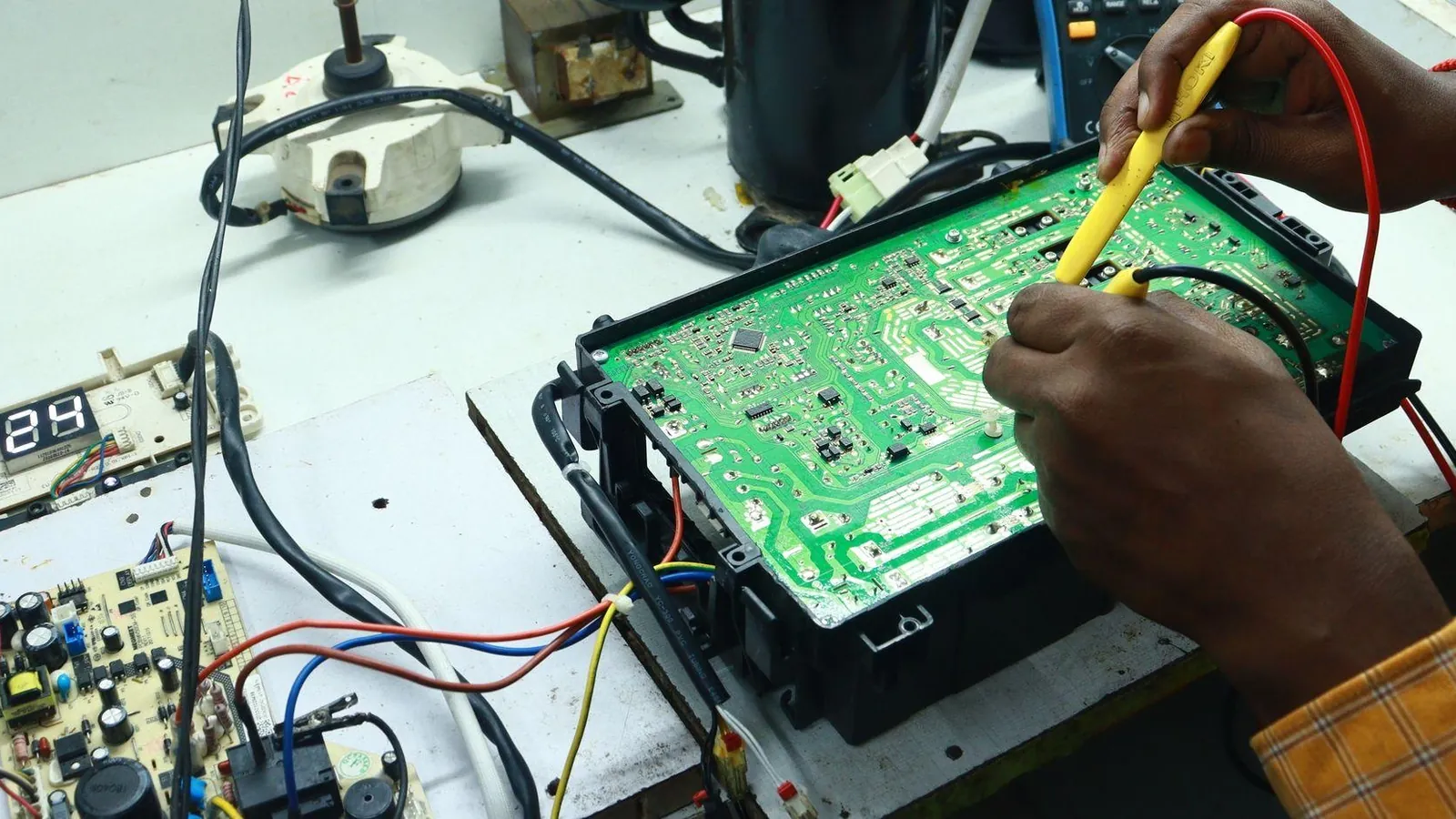
How to reset a mini split when the unit stops working, the display shows a code you don't recognize, and you need it running before tonight. The good news is that most ductless problems that show up after a power outage, a voltage dip or a random bug can be cleared with a reset. This guide walks you through the process for nearly every brand, explains how to read error codes so you'll know whether a reset will actually help, and draws a clear line between what you can safely fix and what needs a technician.
What to Know First
-
Start with a simple power reset: turn the mini split off with the remote control, switch the dedicated circuit breaker OFF for 30–60 seconds, then turn it back ON and restart the indoor unit.
-
If your indoor unit has a reset button behind the front cover, you can use it to restart the control board and clear minor problems without touching the breaker.
-
Always check the display or LEDs on the indoor unit for any error code before you reset. Codes like E1, P0 or communication errors between indoor and outdoor units tell you what actually failed.
-
If the same error code or problem comes back after a reset, stop cycling power and call a licensed HVAC technician. Before you open the outdoor unit or connect gauges to the refrigerant circuit, you'd want to make sure this is something you really need to do.
1. Quick Ways to Reset a Mini Split
For most ductless mini splits installed in US homes since about 2010, here are simple, brand-neutral reset steps. The reset procedure can vary slightly among different brands, but the underlying logic is the same. You should cut power, let the control board fully discharge, and restore power so the system can start fresh.
A circuit breaker reset is usually the safest, most universal method. Some models also have a reset button on the indoor unit or a reset function through the remote control. All three are covered below.
Circuit Breaker Reset (Works for Most Brands)
Power cycling the system is a matter of turning off the unit and cutting power at the circuit breaker. Here's the step-by-step:
-
Turn the system off with the remote control or wall controller first. This prevents sparking and makes the restart cleaner.
-
Locate the dedicated circuit breaker labeled for the mini split unit in your main electrical panel or subpanel. Some homes also have an outdoor disconnect switch near the condenser-either one works.
-
Flip the breaker to the OFF position. Turn off the breaker for 30 seconds to clear a basic problem. With a persistent error code that has locked out the unit, leave the breaker off for 5 minutes. This gives control board capacitors time to fully discharge.
-
Flip the breaker back ON. Wait 2–3 minutes for the indoor and outdoor unit electronics to boot and sync with each other.
-
Press the power button on the remote and start the indoor unit in cooling or heating mode at your usual temperature setpoint.
-
Watch the display. If the indoor unit right away shows the same error code or shuts down again, stop resetting and move on to diagnostics or call a technician.
Reset Button on the Indoor Unit
To use it:
- This restart usually resyncs communication with the outdoor unit without you needing to touch the circuit breaker.
Remote Control Reset
A remote control reset fixes issues where the remote is out of sync or sending old commands, but it does not clear error codes stored in the indoor unit's control board.
If the mini split unit trips the circuit breaker immediately after resetting, stop attempting to reset. Do not repeatedly flip the breaker. A burning smell, smoke, or loud electrical popping means you have an electrical fault that needs an electrician or HVAC pro immediately.
2. Reading Error Codes Before You Reset
Modern ductless systems shut themselves down and display an error code, or flash a pattern of LEDs, when sensors detect a dangerous or damaging condition. You want to read and record the code before you clear it with a reset, because that code is your best clue about whether a simple power cycle will solve the problem or waste your time.
Where to Find the Code
-
On many indoor units, codes appear on the front LED display. Examples include E1, E5, P0, F0 or four-character codes like "CH 38."
-
Some outdoor units have a small inspection window on the control box with a two-digit number code. For example, EG4 hybrid solar mini splits show number codes: 03 is indoor/outdoor communication failure, and 31 and 32 are the indoor air and evaporator sensors.
-
Check the indoor unit, outdoor unit and even the remote screen for any code before turning power off.
Record the Code Before Resetting
Error codes are model-specific. E1 on one brand's indoor unit can mean high pressure, while on another it may be a communication error. Take a photo with your phone of the code on the display before you do anything else.
Look It Up
-
You can start with the owner's manual or installation manual for your model number (found on the indoor unit nameplate).
-
Many rebrands share the same error tables. Lennox MPA/MPB/MLA mini split units follow the classic Midea code set that is in service manual Corp1816-L7 (10/2020), and MCB/MWCB units use four-character codes from the same manual. If your brand is a Midea rebrand, cross-reference material may already exist.
-
Independent code lookup tools let you choose a brand, enter an error code and see likely causes plus what you can safely check yourself.
What a Reset Actually Clears
Resetting a mini-split system can clear temporary error codes. A proper power cycle clears old error memory, timer and schedule problems and minor communication issues between indoor and outdoor units. Error codes and timer settings that were stuck from a previous session are what a reset clears.
Reset‑Fixable vs. Needs‑a‑Pro
| May Be Cleared by a Reset | Usually Needs a Technician |
|---|---|
| Random shutoff after a power blink or storms | Recurring E1/E5/P0 codes after a proper reset |
| Display frozen on the indoor unit | Outdoor unit not starting at all |
| Remote command lag or timer stuck on | Persistent error codes after restart |
| One‑time communication fault between units | Ice on the outdoor unit in mild weather |
| Temporary sensor reading out of range | Repeated breaker trips or electrical fault |
Repeated error codes indicate a need for professional help. If the same code comes back after one careful reset and basic checks (filters, blocked airflow) are done, stop cycling power and schedule an HVAC technician. Trying to clear the fault over and over can mask a developing problem and lead to bigger damage-like a burned compressor or fried control board.
3. Safe Troubleshooting Before Calling a Pro
This section covers simple checks you can do with a screwdriver and a flashlight after (or before) a reset, plus the clear lines where legal or safety rules mean it's time for a pro.
Easy Checks Around the Indoor Unit
-
Airflow clearance. Make sure the front panel of the indoor unit fully closes and that no furniture, curtains or shelves block intake or discharge. Blocked airflow can prevent proper cooling or heating even when the system is running usually.
-
Condensate drain. Verify that the drain line on the indoor unit is not dripping inside, backing up into the wall, or setting off a float switch. A clogged drain line can cause water leakage issues and can shut the unit down with an error.
Quick Inspections Around the Outdoor Unit
-
Walk around the outdoor unit and remove leaves, snow or debris blocking the coil or fan guard. Keep at least 2–3 feet of clearance on all sides.
-
Do not open the outdoor unit's electrical compartment or remove panels unless you are trained. Internal repairs should only be performed by licensed technicians.
Legal and Safety Limits on DIY Work
-
Under US EPA rules (40 CFR 82.161), anyone who attaches or takes off hoses and gauges on a split-system mini split (a high-pressure appliance) must hold EPA 608 Type II or Universal certification. Do not hook up gauges to "check refrigerant" yourself.
-
Refrigerant sealed inside a pre-charged appliance with a fully put-together circuit is exempt from some handling rules under 40 CFR 82.154(c)(1)(vii). That is why you can buy and install certain pre-charged mini splits. Opening that sealed circuit is still a technician's job.
-
State and local electrical codes generally require a licensed electrician or HVAC contractor to modify wiring to the circuit breaker or disconnect. Limit yourself to operating the breaker and the outdoor disconnect switch, not rewiring them.
-
For context, the EPA's May 2026 Technology Transitions rule removed the January 1, 2026 installation cutoff for R-410A split systems whose components were manufactured or brought in before January 1, 2025. New York has kept its own 2026 cutoff. If your repair involves a refrigerant change or system replacement, a technician will know which refrigerant regulations apply to your unit.
When to Call a Pro
-
Recurring error codes or lockouts after a proper reset and basic cleaning.
-
The breaker for the mini split is tripping immediately or repeatedly when the outdoor unit tries to start.
Doing these basic checks, writing down the error code, and noting what happened before and after the reset gives an HVAC technician a head start. It often cuts down on diagnostic time and cost, and it protects your system from the kind of damage that comes from repeated blind resets.
FAQ
How long should I leave the circuit breaker off when resetting a mini split?
For a basic reset on most mini splits, 30–60 seconds with the breaker OFF is enough to clear simple problems and communication issues between indoor and outdoor units. With a unit that is locked out with an error code that won't clear, leaving the breaker OFF for up to 5 minutes helps fully discharge the control board capacitors and forces a deeper restart. If the breaker immediately trips again when turned back ON, do not keep trying. The issue is electrical or mechanical and needs a technician or electrician.
Will resetting my mini split erase my settings or Wi-Fi connection?
A quick breaker reset usually clears timers and schedules, but many units remember the last basic mode and temperature setpoint once power returns. Wi-Fi modules in some smart mini splits may forget network details after a long power loss, so you might have to reconnect through the app. Check the owner's manual for how your specific indoor unit stores settings, because behavior varies by brand and control board design.
My mini split doesn't have a reset button - is that normal?
Completely normal. Many brands rely only on the remote control and the circuit breaker reset and do not include a dedicated reset button on the indoor unit. Flipping the dedicated breaker OFF and ON, then starting up again with the remote, performs the same basic control board reset. Confirm your model's reset method in the manual. Some units hide a reset or "test run" button behind the indoor unit's front cover without labeling it clearly.
Can a reset fix a mini split that is low on refrigerant?
No. A reset cannot fix low refrigerant. At best it temporarily clears a high- or low-pressure lockout, but the error will return as soon as the compressor cycles again. Low refrigerant points to a leak somewhere in the sealed circuit, which legally and practically requires an EPA-certified technician to test, repair and recharge. If recurring pressure-related error codes keep coming back after a reset, stop cycling power and schedule professional service to prevent compressor damage.
Is it okay to reset my mini split after every storm or power outage?
One careful reset after a major outage or brownout is reasonable, since voltage dips can confuse the indoor and outdoor unit electronics. But if every storm causes the same error code or tripped breaker on the mini split unit, there may be a deeper power quality, surge or control board issue that needs a technician's diagnosis. Consider having a properly sized surge protector or dedicated outdoor disconnect switch installed to help protect the outdoor unit from future electrical events.
Figures and specs above are as published in October 2026 and may change. Your own unit's installation manual and local code take precedence. Brand names are trademarks of their respective owners, and this site is not affiliated with them.