Mini Split Fan Not Spinning: Quick Fixes, Causes & When to Call a Pro
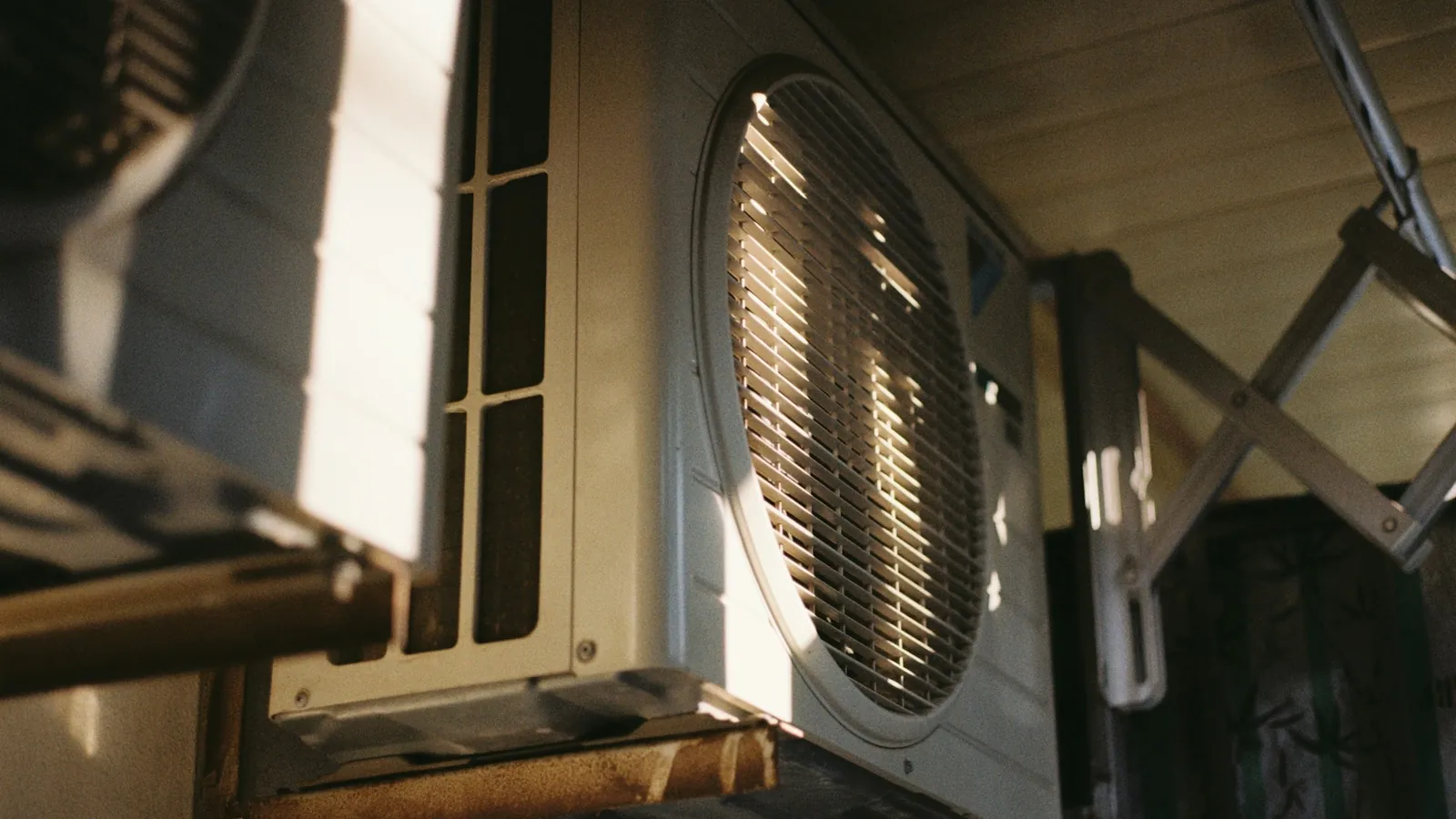
A mini split fan not spinning is a problem you need to act on fast. Whether it's the outdoor condenser fan sitting still while the compressor hums, or the indoor blower pushing zero air into the room, a fan that is not spinning means heat transfer has stopped and damage is building. This guide walks you through what to check yourself, what the error codes mean, and where to draw the line and call a trained professional.
Key Takeaways
-
It's a good idea to shut the air conditioner off at the thermostat and the circuit breaker the moment you notice a fan not spinning. If you run the AC without a working fan, the compressor can overheat.
-
The most common causes are a bad capacitor, a burnt-out motor, blocked fan blades, a tripped breaker or control board problems.
-
You can safely check the power, the thermostat settings, basic obstructions and the filters. Anything that involves live voltage, capacitors or the sealed refrigerant circuit is work for a technician only.
-
Ductless mini splits usually log a fault code when a fan fails. Look up your specific code on diyhvactools.com before scheduling service so you know what you're dealing with.
How Mini Split Fans Work (And Why a Non‑Spinning Fan Is Urgent)
The mini-split fan may stop spinning for different reasons depending on its type. Fan trouble can come from failures that are mechanical or electrical. On inverter mini splits the fans are usually driven by a DC fan motor that is controlled by a circuit board (PCB), and the system will often throw an error code and shut down to protect itself. Without that protection, the compressor can overheat or frozen evaporator coils can form indoors. A burnt-out compressor costs nearly as much as a new AC unit, so a stopped fan isn't something you can ignore for long.
When the Fan Stops Spinning
Act within a few minutes of seeing the problem:
-
Turn the mini split off at the remote or thermostat, then shut power at the AC breaker or outdoor disconnect so the compressor stops running.
-
There's air at the indoor head. Note whether the unit is blowing cold air, warm air or nothing at all. Listen for the outdoor unit - if the compressor sounds like it's running while the condenser fan is still, that's a clear sign of trouble.
-
Photograph any lights that are flashing, error codes or symbols on the indoor display. These codes are your best diagnostic clue.
Quick DIY Checks for Power, Thermostat and Obstructions
Before you assume a failed AC fan motor, run through these safe checks:
-
Confirm the system is calling for cooling or heating. Mode should be set to "Cool" or "Heat," the temperature set below or above the current room temperature, and the fan setting on auto rather than off. Check thermostat settings to make sure it's in cooling mode.
-
Inspect the circuit breaker panel. A tripped breaker can prevent the AC from running. You can reset it by flipping the breaker fully off, then on. If it trips again, stop - trips that keep happening point to deeper electrical issues. So can power issues cut power to the fan unit? That depends on where the break is.
-
There's debris you can check for visually at the outdoor unit. Leaves, plastic bags, animal nests or ice around the condenser fan can jam the blades. Debris around the outdoor unit can block fan operation, and obstructions near the fan may need cleaning for proper operation.
Common Causes When a Mini Split Fan Is Not Spinning
Common causes for a mini-split fan that is not spinning include power interruption and failed components. Here are the categories you'll run into most often:
-
Faulty capacitor. A bad capacitor often causes the AC fan to stop spinning. A sound that is humming often shows a bad capacitor - the motor tries to start but can't get the boost it needs.
-
Burnt out motor. A burnt-out fan motor can prevent the AC fan from operating. AC systems over 10 years old may face multiple part failures, and worn bearings or fried windings are common on older outdoor units.
-
Sensor or wiring problems. Wiring problems or a failed sensor can trigger a protective shutdown. Many brands log these as specific error codes like "outdoor fan speed out of control," which you can look up on diyhvactools.com.
Outdoor Fan Not Spinning: Diagnosing the Condenser Side
-
A failed capacitor is one of the most common causes. Sounds that are humming from the unit show a failing capacitor. Look for a capacitor body that is swollen or leaking - that's a strong clue. Capacitors can keep dangerous electrical charges even when the power is off, so don't touch them without proper discharge tools.
-
Testing with a multimeter helps check if voltage reaches the fan motor. On a 115 V MRCOOL outdoor DC fan motor, the red Vs/Vm pin should read 140–190 V, white Vcc 14–17.5 V, and yellow Vsp 0–5.6 V when the unit is commanded on. On 208–240 V systems, Vs/Vm rises to 280–380 V. This is multimeter work for experienced DIYers only.
-
With power off and the UVW connector unplugged, measure resistance between U-V, U-W and V-W. Equal readings mean the motor windings are likely good and suspicion shifts to the outdoor PCB. Unequal readings usually mean the condenser fan motor is bad.
A burnt-out fan motor needs professional replacement. Replacing an outdoor condenser fan motor or its capacitor involves high voltage, so you should schedule a technician at this point.
Indoor Fan Not Spinning in the Room Unit
-
Listen at different fan speed settings. If you hear refrigerant hissing or the coil getting cold but the fan never speeds up, suspect the indoor blower motor or indoor PCB.
-
MRCOOL's own indoor fan test is to run the unit in fan-only on high for about 15 seconds, then measure pins 1 and 2 at the fan connector. Readings under 100 V on 208–240 V units (or under 50 V on 115 V units) show a bad indoor PCB rather than a failed fan motor.
-
Dirty cross-flow fan wheels and clogged filters can make it seem like a fan that is not spinning. Cleaning the filters on a regular basis improves airflow and efficiency, so clean the blower wheel and filters before you assume motor problems.
-
Severe ice buildup on coils can freeze the fan blades, blocking rotation completely. If you see ice, it's a good idea to turn the system off and let it thaw before you restart it.
-
Some brands flash specific indicator lights for indoor fan error. On Fujitsu units, for example, a specific blink pattern shows the issue - but always match the code to your exact model number.
Error Codes and Blink Patterns
Many mini splits store fan problems as digital error codes or light patterns that are blinking, giving more precise clues than sound or feel alone.
-
On some inverter error tables, EC 07 ("outdoor fan speed out of control") ties back to either the outdoor fan motor or the outdoor PCB that commands it.
-
EC 53 links to the T4 ambient sensor or the outdoor PCB, showing how sensor data can make the system think the fan is misbehaving even if the fan blades are physically fine.
-
A Fujitsu Operation lamp blinking once plus a Timer lamp blinking once shows a serial communication error between indoor and outdoor units, while 9 Operation + 7 Timer blinks is logged as outdoor fan motor 1 error.
-
Codes vary by brand, year and sub-model. Always match the code to the exact model number on your data plate, then use diyhvactools.com or the manufacturer manual.
Write down or photograph the exact lights and numbers before you reset the power. Clearing the code can erase a useful diagnostic clue for your technician.
DIY Fixes vs Calling a Technician
-
Resetting a tripped breaker once
-
Opening the sealed refrigerant circuit (needs EPA 608 certification in the US)
Professional help is needed for faulty capacitors and burnt-out motors. If the system repeatedly throws the same error code for an AC fan or condenser fan despite basic resets, that usually points to a failed fan motor, bad capacitor or control board that needs repair or replacement by a trained professional. Early diagnosis can save a compressor - and the extra strain of running without a working fan can turn a $200 fix into a full system replacement.
Preventing Future Fan Problems in Your Mini Split
-
The Department of Energy recommends annual AC maintenance. A professional visit every one to two years lets a technician check fan motor amperage, capacitor health and bearing condition. Regular maintenance prevents costly repairs and system failures.
-
Pay attention to early warning signs: a sound that is humming with no fan movement, unusual rattling from the fan blade area, or new error codes about fan speed. Address them before they cause wasted energy or a full system stop working event.
-
Look up any new fan-related fault codes on diyhvactools.com as they appear - it gives you a head start on understanding whether you need a part, a cleaning or a tech.
FAQ About Mini Split Fan Not Spinning
Is it safe to run my mini split if the outdoor fan is not spinning but the indoor unit still blows air?
It is not safe. Running the air conditioner with a stopped condenser fan quickly overheats the compressor and raises refrigerant pressures in the outdoor coil, risking permanent damage. It's a good idea to turn the system off immediately at the thermostat and at the circuit breaker. Secondary risks include tripping the breaker repeatedly, causing other issues with error codes, or breaking down refrigerant oil inside the compressor. Leave the AC unit off until a technician has checked the condenser fan motor, capacitor and control board.
Why Does My Mini Split Fan Start After a Breaker Reset, Then Stop?
Intermittent operation often points to a weakening capacitor, an overheating AC fan motor, or a control board that shuts the fan down when it detects abnormal current or speed feedback. Each restart cycle puts extra strain on the compressor, especially if the condenser fan isn't keeping up with heat removal. If the breaker or unit must be reset more than once for the fan starts to hold, treat it as a fault and schedule service. Capture any error codes before the fan stops to give the technician a clearer picture.
Can a Dirty Filter Make the Mini Split Fan Seem Like It's Not Spinning?
Yes. A heavily clogged filter can restrict airflow so much that you barely feel cold air at the grille, even though the indoor AC fan motor and fan blades are physically turning. Restricted airflow can cause the indoor coil to freeze, which further blocks air and may trigger safety shutdowns. Remove and clean filters any time airflow seems weak - especially in homes with pets or recent remodeling dust. If filters are clean and you still feel no air at any fan setting, the issue is likely with the indoor fan motor, its capacitor or the indoor PCB.
How can I tell if the problem is the fan motor or the capacitor on my mini split?
A sound that is humming might show a capacitor or motor issue, but there are differences. A bad capacitor usually produces a sound that is humming with a stationary fan blade. The motor itself may still feel cool. A failing AC fan motor can make grinding or squealing noises, run very hot or show signs of intermittent spinning even with a good capacitor - and may show resistance readings that are not equal between windings. Proper diagnosis means testing capacitance with a meter and checking motor voltages, which you aren't set up to do safely. Gather symptoms - sounds, error codes, when it fails - and let a technician confirm whether to replace the capacitor, fan motor or the control board.
Figures and specs above are as published in October 2026 and may change. Your own unit's installation manual and local code take precedence. Brand names are trademarks of their respective owners, and this site is not affiliated with them.