Mini Split Blowing Warm Air in Cooling Mode: DIY Checks Before AC Repair
What You Need to Know
-
First, make sure the mini split is actually in cooling mode and you've set the temperature at least 3–5°F below what the room is right now.
-
The most common reasons for a mini split blowing warm air are wrong mode settings, a dirty air filter, blocked indoor airflow or an outdoor condenser unit that is not running.
-
Low refrigerant, dirty condenser coils or a failing compressor can all cause blowing hot air but need an EPA 608–certified technician to diagnose and repair.
-
Use your remote and the indoor display to check for error codes, then look them up by brand and code on diyhvactools.com to see what they mean and what you can safely check yourself.
-
It is a good idea to shut the system off and call for professional AC repair if you see ice on the coils, smell burning, hear grinding from the outdoor unit, or the breaker keeps tripping.
Why Your Mini Split Is Blowing Warm Air in Cooling Mode
With a mini split blowing warm air in cooling mode, the cause usually comes down to wrong settings, a maintenance issue or a fault in the refrigerant circuit. Before you assume the worst, understand that air at or slightly below room temperature is normal for the first few minutes after the unit starts up while the compressor gets up to speed. Really hot air that feels like the heater is on is a different story - that points to a fault or wrong mode.
Here are the most common causes at a glance:
-
The mode on the remote is wrong (the symbol for Cool, not Fan, Dry, Heat or Auto)
-
With the temperature set too high, the unit won't actually trigger cooling
-
Inside the unit, the coil or blower wheel is clogged with dust
-
The outdoor condenser unit is not running or very blocked
-
Low refrigerant or a refrigerant leak
-
The condenser coils are dirty and can't get rid of heat properly
-
A stuck valve is sending hot refrigerant to the indoor coil
-
Electrical, sensor or control problems leave the compressor running without doing any work
-
The condensate drain lines are clogged and this prevents the unit from operating normally.
You can check many of these with just a screwdriver and a flashlight. But anything that involves the sealed refrigerant circuit, capacitors or board replacement needs a licensed technician with EPA 608 Type II or Universal certification.
Quick DIY Checks When Your Mini Split Blows Warm Air
-
Check that the mode icon shows Cool (the symbol), not Fan, Dry, Auto or Heat. Wrong thermostat settings can make a mini split blow warm air even when you think it is in cooling mode.
-
Make sure the temperature you selected is lower than the room temperature, at least 3–5°F below.
-
Do not judge comfort from the lowest fan speed alone. Set the fan to medium or auto for a fair test.
-
Check that the indoor unit has power and the display looks normal with no flashing error lights. If an error code shows up, you'll need a professional to take a look.
-
Go outside and listen. Within a few minutes, the outdoor unit should start. You should hear the fan and a quiet compressor hum. An outdoor unit that is not running can lead to warm air blowing indoors. If the unit is quiet and the breaker is not tripped, that is a problem.
-
Reset any tripped circuit breakers if the outdoor unit is not running, then watch to see if it trips again.
-
Open the front cover and slide out the mesh filter screens. If they are gray, fuzzy or you can't see light through them, wash them in lukewarm water, dry them completely and put them back. Dirty filters can cause warm air from mini splits and even lead to coil icing.
-
Make sure furniture, curtains or covers are not blocking the inlet or outlet. When airflow around the indoor unit is restricted, cooling capacity drops fast.
-
After 10–15 minutes in proper cooling mode, hold your hand 6–12 inches from the outlet. The air should feel clearly cooler than the room. A healthy air conditioner produces about a 15–20°F temperature drop between return and supply air. If the drop is under 10°F, there's probably a deeper issue.
Error codes:
- Look at the indoor display for any code. On diyhvactools.com you can pick your brand, type in the code and see what it means. For example, EG4 hybrid solar mini splits show two-digit number codes. Codes 31 and 32 are indoor air and evaporator sensor faults. Gree, Tosot and Cooper & Hunter share the Gree code table, and York's M-series (DHM) and Friedrich's Floating Air Select service manuals use those same codes.
What Causes Warm Air and How to Check
Wrong mode or thermostat issues: Auto mode can sometimes switch to heat if the control logic thinks the room is already cool enough. A temperature sensor in the remote that is drifting can also make the system act strange. Wrong thermostat settings cause warm air output more often than any mechanical fault.
Dirty air filter and indoor coil: A clogged filter reduces airflow across the evaporator coil, which makes the coil run too cold and possibly ice over. Once frozen evaporator coils block airflow, you're going to get warm air after the system shuts down to protect itself. Shine a flashlight through the coil behind the filter. If you see visible matting of dust on the fins, it is time for a professional coil cleaning. According to the U.S. Department of Energy, dirty condenser coils can increase energy use by up to 30%, and the same principle applies to a filthy indoor coil.
Outdoor condenser unit not running: Watch whether the outdoor unit is operating normally while cooling mode is on. The fan should spin, and you should hear compressor activity. A malfunctioning outdoor condenser unit can blow warm air indoors even though the indoor fan runs fine. With the unit completely silent and the breaker good, likely causes include a bad capacitor, a failed inverter board or an internal compressor fault. All of those are technician-only repairs.
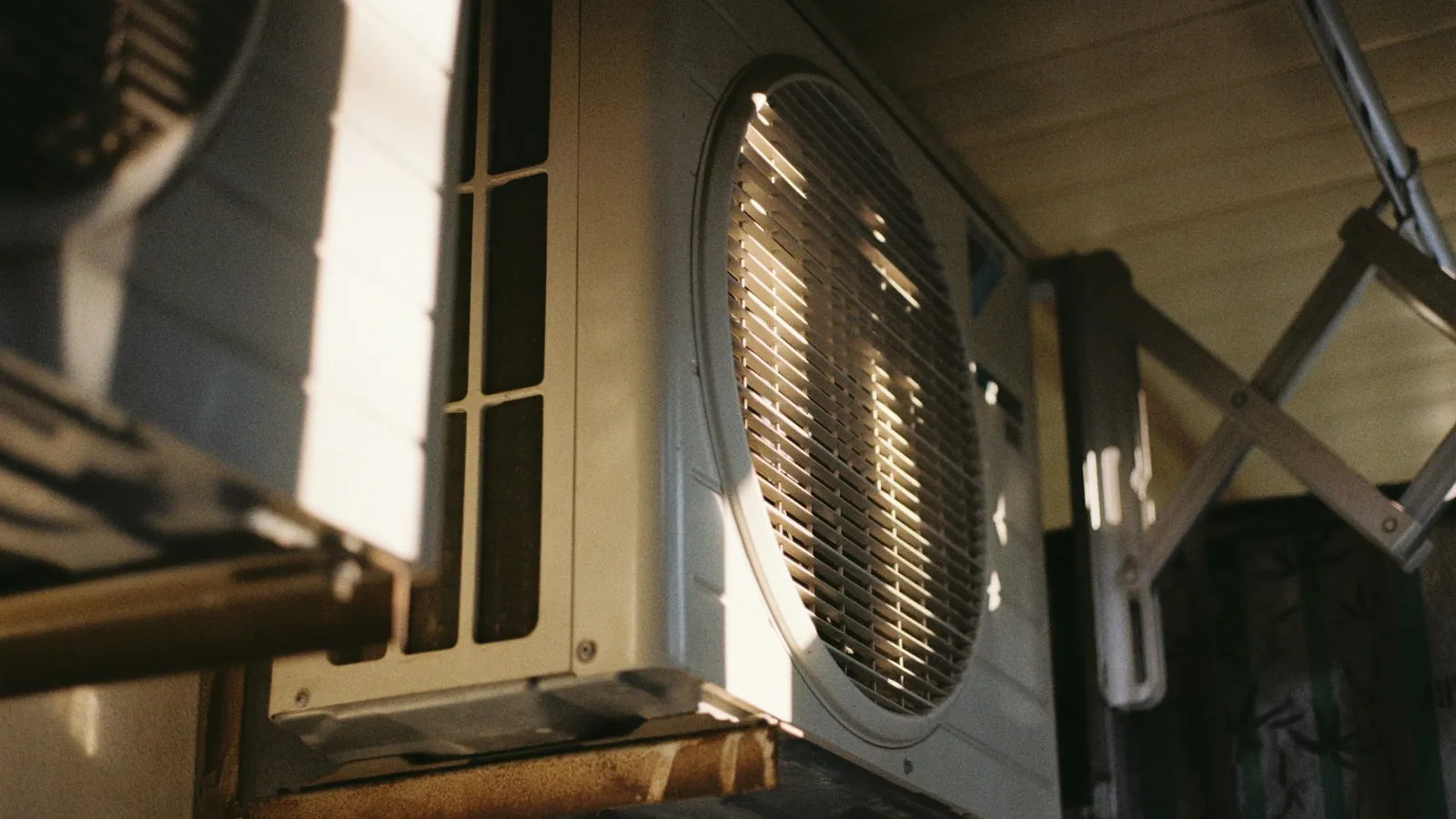
Outdoor airflow and condenser coils: Blocked outdoor condenser units stop heat from escaping. Check that the condenser has at least 12–24 inches of clear space on all sides. Dirty condenser coils that are coated with cottonwood fluff, grass clippings or road dust reduce cooling efficiency a lot. When airflow around the outdoor unit is restricted, cooling performance drops and the house gets harder to keep cool. A gentle rinse with a garden hose from the inside out helps with light debris. Bent fins or heavy buildup need professional service.
Low refrigerant: Low refrigerant causes ineffective cooling. Watch for these signs: the system runs constantly but never reaches the setpoint, the line set or outdoor coil has frost or ice in warm weather, or you notice hissing at flare connections and oil stains around fittings. Refrigerant levels drop because of leaks or improper charging. A sealed system does not consume refrigerant, so any loss means a leak. Low refrigerant can lead to longer runtime and higher energy costs, and only an EPA 608–certified technician can legally recover and recharge it.
Sensor and control issues: Thermistors on the indoor coil can fail or come loose, which confuses the control board into short cycling or delivering warm air. The EL 0C flowchart for Pioneer and Senville units starts with putting your hand in front of the indoor outlet: cool air means check whether the T2 sensor is securely attached. No cool air means check for leaks, then blockages. If a sensor-related error code shows up, avoid guesswork and schedule service.
When to Call a Pro
-
Low refrigerant and leaks: Refrigerant diagnosis and charging should be handled by a qualified HVAC technician. Addressing refrigerant issues early is going to prevent compressor strain. Just topping off without finding the leak is going to make the problem worse and cost more in the long run.
-
Electrical and inverter issues: Failed compressor start capacitors, inverter boards, burnt wiring and relay failures are not safe for DIY. Tripped breakers or electrical faults can prevent the cooling cycle from operating normally. If you smell burning or see arcing, shut the system off immediately and contact a technician.
-
Compressor and mechanical failures: A mini split that only blows hot air in cooling mode, makes loud grinding noises or has a compressor that won't start may have an internal compressor failure. Replacement is a major repair. Often it's a decision point between repairing and replacing the whole unit depending on age and warranty condition.
-
Severe icing: Checking for ice buildup on coils is important when you are diagnosing cooling issues. Ice on the unit means you're going to need service. Turn the system off and let the ice melt naturally. After thawing, if the coil freezes again and you've confirmed a clean filter, call a technician.
-
Error codes: Note exact codes from the indoor display and outdoor board. Many brands share code tables, but the final diagnosis should always be confirmed against your specific model and year. Request professional help if the outdoor unit doesn't operate, or if warm air persists after all your checks. Turn off the system and call a technician if you are unsure of the cause.
How to Keep Your Mini Split Cooling Well
-
Routine cleaning: Clean or replace dirty air filters every one to three months during cooling season, more often if you have pets or live in a dusty house. Schedule professional cleaning of indoor and outdoor coils every 1–2 years. Regular maintenance of mini splits includes cleaning filters and making sure there's clear airflow around the outdoor unit.
-
Outdoor condenser protection: Keep at least 2 feet of clearance around the outdoor condenser unit and trim plants back. Avoid decorative covers that trap heat. You'll want to remove any cover completely before running the unit in spring.
-
Seasonal checks: Before each cooling season, test the system on a mild day: set it to Cool, lower the temperature, use moderate fan and confirm that cool air comes out of the indoor head and the outdoor condenser starts normally.
-
Using test modes: Some brands offer built-in test modes. On many Fujitsu indoor units, holding the MANUAL AUTO button for more than 10 seconds forces a cooling test run, with the Operation and Timer lamps flashing together during the test. Check your manual for any service modes and exit them after you've confirmed cold air.
FAQ About Mini Splits Blowing Warm or Hot Air in Cooling Mode
Why is my mini split blowing warm air right after I turn it on?
Most mini splits are going to blow room-temperature air for the first 2–5 minutes while the outdoor condenser unit starts and the refrigerant circuit stabilizes. This is normal. If it never switches to clearly cool air after 10–15 minutes in cooling mode, treat it as a problem and run through the basic troubleshooting steps above.
Is it safe to keep running my mini split if it's blowing hot air in cooling mode?
Generally no. If you suspect low refrigerant, hear grinding or see ice on the refrigerant lines, continued operation can overheat the compressor or damage electronics. Shut the system off at the remote and, if needed, the breaker until a technician can take a look.
How do I know if my mini split needs more refrigerant?
You can't measure refrigerant levels without gauges, but you can watch for signs: it runs nonstop with little cooling, there is ice buildup in warm weather, you hear hissing at joints, or error codes point to low-pressure protection. Only an EPA 608–certified technician can legally check and recharge the system. Type II covers high-pressure equipment like mini splits, and certification never expires. Adding refrigerant without repairing the leak isn't a lasting fix.
When should you call a pro instead of doing more DIY?
Call for service if you've confirmed mode and thermostat settings, cleaned the filter, checked for blockages and the unit still blows warm air. Other reasons to call: the outdoor unit doesn't run, breakers trip, you see ice or oil stains, or an error code points to sensors, compressor or refrigerant issues. Gather your model number, error codes and a brief description of symptoms to help the technician diagnose faster and get your home cool sooner.
Figures and specs above are as published in October 2026 and may change. Your own unit's installation manual and local code take precedence. Brand names are trademarks of their respective owners, and this site is not affiliated with them.